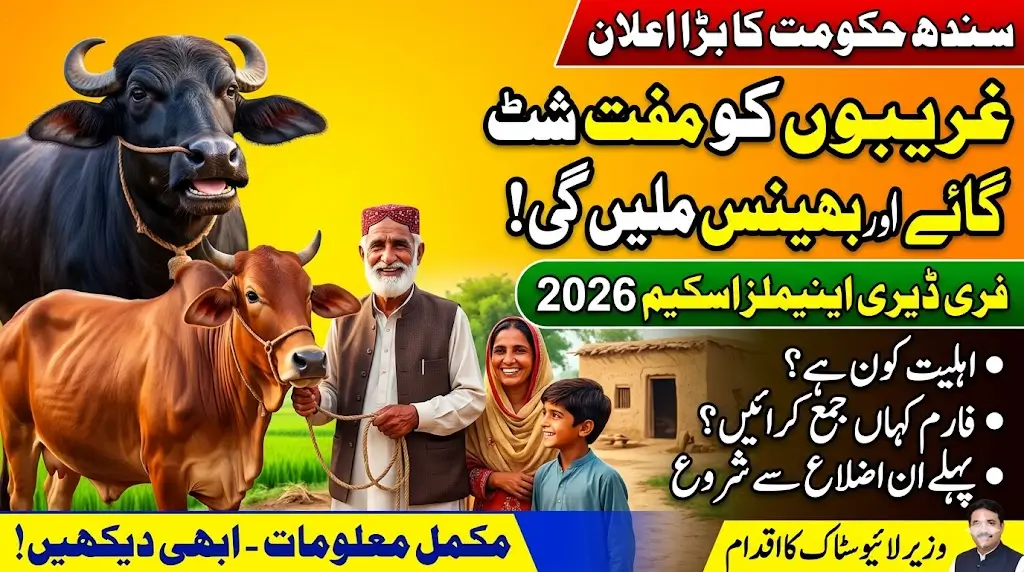
Sindh to Provide Milk Animals to Poor Families – Complete Guide to the Livestock Support Program 2026 The Government of Sindh has announced a major initiative aimed at reducing poverty and improving the livelihoods of underprivileged communities. Under a new economic sustainability program, poor families across the province will receive milk-producing animals such as cows and buffaloes to help them build a stable source of income.
The announcement was made by Muhammad Ali Malkani, the provincial Minister for Livestock and Fisheries, during a high-level meeting held in Karachi. The initiative is part of a broader effort by the Sindh Livestock and Fisheries Department to empower vulnerable households and promote economic sustainability in rural areas.
According to officials, widows and orphan families will receive priority under this program. The project will initially be launched in the districts of Tharparkar and Badin, two areas where poverty levels remain significantly high.
This comprehensive guide explains everything about the Sindh Milk Animals Scheme 2026, including objectives, eligibility criteria, registration process, benefits for rural families, and how the program aims to transform local economies.
Overview of the Sindh Milk Animals Program
The new livestock distribution program is part of the Pro-Poor Social Protection and Economic Sustainability Initiative, designed to uplift poor families by providing them with productive assets rather than temporary financial aid.
Instead of offering short-term cash assistance, the government plans to distribute milk-producing animals that can generate continuous income through dairy production and breeding.
During the official meeting, Muhammad Ali Malkani emphasized that the initiative will focus on empowering families who are struggling to meet their daily needs.
He stated that the program will provide animals such as:
- Dairy cows
- Buffaloes
- Goats in some cases depending on regional needs
These animals will allow families to earn income through milk sales, dairy products, and livestock breeding.
Government’s Vision Behind the Livestock Support Initiative
The Sindh government has designed this program with a long-term economic vision.
Key Objectives
The main goals of the initiative include:
- Reducing poverty in rural communities
- Supporting widows and orphan families
- Promoting livestock farming as a sustainable livelihood
- Strengthening rural economies
- Improving food security through dairy production
Livestock farming has traditionally been an important economic activity in Sindh, especially in rural districts where agriculture and animal husbandry are primary sources of income.
By distributing dairy animals, the government hopes to help poor families become financially independent.
Why Livestock Distribution Is an Effective Poverty Reduction Strategy
Many poverty-reduction programs rely on short-term financial assistance. However, livestock distribution programs provide long-lasting benefits.
Sustainable Income Source
Milk-producing animals generate daily income through the sale of milk and dairy products.
Livestock Breeding
Animals can reproduce, allowing families to grow their livestock holdings over time.
Food Security
Families can use milk for their own nutrition while selling the surplus in local markets.
Low Startup Cost
Livestock farming requires minimal infrastructure compared to other businesses.
Because of these advantages, livestock distribution programs have proven effective in many rural development initiatives across Pakistan.
Priority for Widows and Orphan Families
A key feature of the program is the priority given to widows and families caring for orphan children.
According to Muhammad Ali Malkani, these groups often face the greatest financial hardships and limited employment opportunities.
Providing them with dairy animals can help them generate a steady income without needing large investments or specialized education.
For example, a widow who receives a buffalo can sell milk in her village every day, creating a stable source of income for her household.
This approach not only supports vulnerable families but also strengthens community resilience.
Launch of the Program in Tharparkar and Badin
The Sindh government has announced that the first phase of the initiative will begin in Tharparkar and Badin.
These districts were selected because they experience:
- High poverty rates
- Limited economic opportunities
- Frequent climate challenges such as drought
Starting the program in these areas will help the government evaluate the implementation process before expanding the initiative to other districts across the province.
Government Officials Involved in the Program
The meeting announcing the program included several senior government officials and representatives from development organizations.
Participants included:
- Dr. Kazim Hussain Jatoi, Secretary Livestock and Fisheries
- Dr. Jamaluddin Junejo, Director Animal Breeding Sindh
- Sajid Basit Qadri
- Danel Khan, DG PPRM
- Sono Khangrani, CEO of Sindh Rural Support Organization (SRSO)
- Chief Executive TMF
Their involvement reflects a coordinated effort among government departments and development partners to ensure the success of the program.
Ensuring Transparency in the Livestock Distribution Program
Transparency is a key concern in government welfare programs. To address this issue, Muhammad Ali Malkani emphasized that strict measures will be implemented to ensure fairness.
Key Transparency Measures
The government plans to implement the following steps:
- Conducting detailed poverty surveys
- Identifying the most deserving households
- Preventing political influence in beneficiary selection
- Ensuring equal distribution across districts
According to the minister, no political or social recommendations will be accepted when selecting beneficiaries.
Only families who genuinely meet the poverty criteria will receive livestock.
Survey Process for Identifying Eligible Families
Before distributing animals, the government will conduct a comprehensive survey to identify the most deserving households.
Survey Objectives
The survey will help authorities:
- Identify districts with the highest poverty levels
- Determine the number of eligible families
- Assess local livestock farming potential
- Verify household income levels
Based on the survey results, priority will be given to union councils where poverty is most severe.
Benefits of the Milk Animals Scheme for Rural Communities
The livestock distribution initiative is expected to bring significant benefits to rural communities.
Economic Benefits
Families receiving dairy animals will have the opportunity to earn income through milk sales.
Nutrition Improvement
Access to milk improves the nutritional health of children and adults.
Job Creation
Livestock farming creates employment opportunities in rural areas.
Women Empowerment
Many livestock businesses are managed by women, helping them gain financial independence.
Example of How the Program Can Change Lives
Consider a poor family living in a rural village in Tharparkar. The family struggles to earn enough income from seasonal agricultural work.
If they receive a dairy cow through the government program, they can start selling milk to nearby households.
Within months, the cow may produce a calf, increasing the family’s livestock assets.
This simple intervention can gradually transform the family’s financial situation.
Role of Livestock in Sindh’s Rural Economy
Livestock plays a crucial role in the rural economy of Sindh.
According to agricultural experts, millions of people depend on livestock for their livelihoods.
Livestock farming contributes to:
- Dairy production
- Meat supply
- Agricultural support through manure
- Rural employment
Programs that support livestock farmers therefore have a direct impact on rural economic development.
Challenges in Implementing Livestock Distribution Programs
Although livestock programs offer many benefits, they also face several challenges.
Animal Health
Proper veterinary care is necessary to keep animals healthy and productive.
Training Requirements
Beneficiaries may require training in livestock management.
Infrastructure Needs
Some families may need proper shelters for animals.
To address these challenges, the government plans to work with livestock experts and rural development organizations.
Future Expansion of the Program
After the initial launch in Tharparkar and Badin, the Sindh government plans to expand the program to other districts across the province.
If the program proves successful, thousands of families could benefit from livestock support in the coming years.
Officials hope the initiative will become one of the largest poverty-reduction programs in the province.
Importance of Livestock Training for Beneficiaries
Providing animals alone is not enough to ensure success.
Beneficiaries may also receive training on:
- Animal feeding practices
- Dairy production techniques
- Disease prevention
- Livestock breeding
These skills will help families maximize the benefits of the animals they receive.
Frequently Asked Questions (FAQs)
What is the Sindh Milk Animals Scheme?
It is a government initiative that provides dairy animals to poor families to help them generate income through milk production.
Who will receive priority in the program?
Widows and orphan families will be given priority.
Where will the program start?
The first phase will begin in Tharparkar and Badin districts.
How will beneficiaries be selected?
The government will conduct surveys to identify the most deserving households.
Is the program free?
Yes, the livestock will be provided free of cost to eligible families.
Conclusion
The Sindh Milk Animals Scheme 2026 represents a significant step toward reducing poverty and improving economic stability in rural communities.
By providing dairy animals to poor families, the government aims to create sustainable income opportunities that can transform lives.
The program’s focus on widows, orphan families, and the poorest households demonstrates a commitment to helping those who need support the most.
With proper implementation, transparency, and training support, the initiative has the potential to strengthen rural economies and improve living standards across Sindh.
As the program begins in Tharparkar and Badin and expands to other districts, it may become one of the most impactful poverty-reduction initiatives in the province’s history.