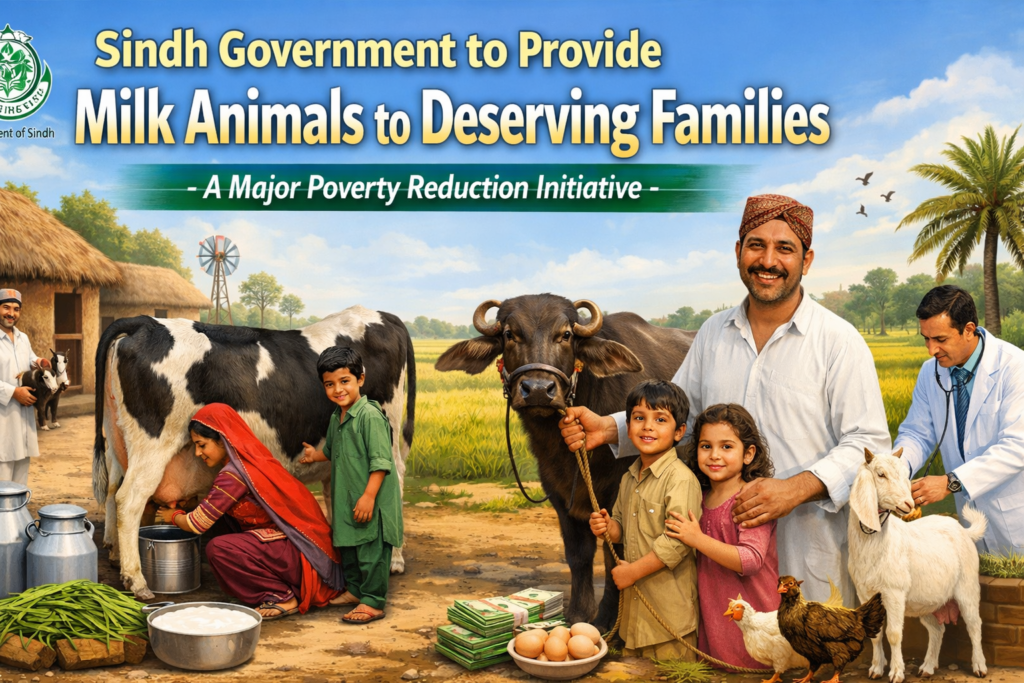
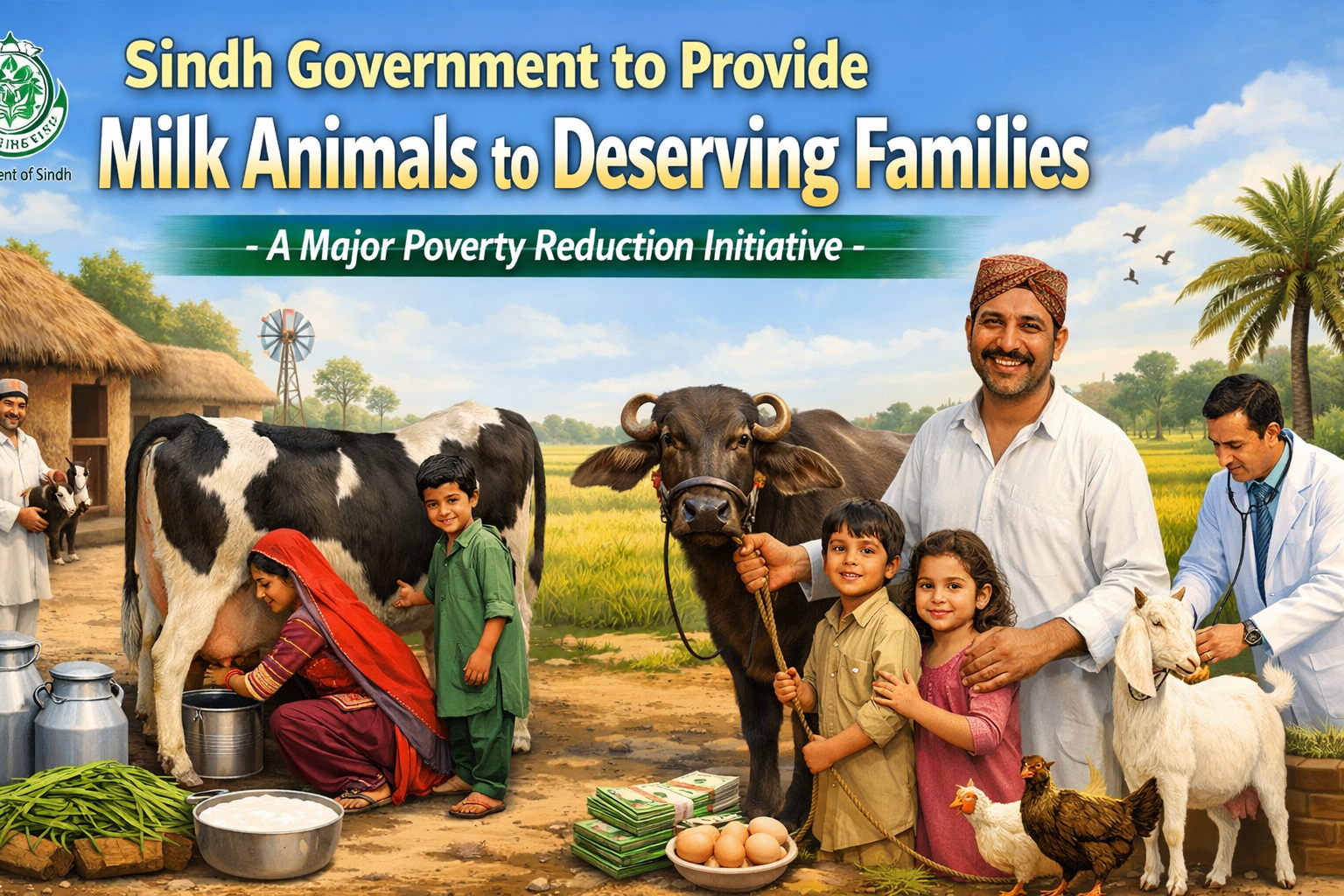
Sindh Government to Provide Milk Animals to Deserving Families – A Major Poverty Reduction Initiative The Government of Sindh has announced an important welfare initiative aimed at reducing poverty and improving the financial stability of low-income families across the province. Under the Pro-Poor Social Protection and Economic Sustainability Initiative, the provincial administration plans to distribute milch animals such as cows and buffaloes to deserving households so they can generate income through dairy farming.
This initiative was discussed during a high-level meeting chaired by Muhammad Ali Malkani, the Provincial Minister for Livestock and Fisheries, in Karachi. The program is designed to empower financially struggling families, particularly widows and orphan households, by providing them with productive livestock that can help them build sustainable livelihoods.
Through this program, the Sindh government aims to address rural poverty while simultaneously strengthening the province’s livestock and dairy sectors. By supporting poor families with dairy animals, the government hopes to create long-term economic opportunities and reduce dependency on short-term financial assistance.
Understanding the Milch Animals Distribution Program
The milch animal distribution program is part of a broader strategy to uplift underprivileged communities through sustainable economic initiatives. Instead of providing temporary financial aid, the government intends to support families with income-generating assets.
Milch animals such as cows and buffaloes can provide multiple economic benefits to households. They produce milk that can be consumed within the family or sold in local markets. Additionally, the breeding of livestock can lead to the growth of small dairy businesses within rural communities.
Under the program, selected families will receive dairy animals along with technical guidance on livestock management. This approach ensures that beneficiaries not only receive animals but also gain the knowledge necessary to maintain and benefit from them.
The initiative aligns with the government’s broader efforts to reduce poverty and promote economic independence in rural areas of Sindh.
Why Livestock Support Is Important for Rural Communities
Livestock plays a vital role in the rural economy of Sindh. Many families in villages rely on agriculture and animal farming as their primary sources of income.
Providing milch animals can significantly improve the economic situation of poor households because dairy farming offers several advantages:
Continuous Income Generation
Milk can be sold daily, providing families with a regular source of cash income. Even small quantities of milk can contribute significantly to household finances.
Improved Nutrition
Milk is a rich source of protein and essential nutrients. Families that receive dairy animals can improve their children’s nutrition by consuming fresh milk and dairy products.
Livestock Breeding Opportunities
Animals can reproduce, allowing families to expand their livestock holdings over time. Newborn calves can either be raised or sold for additional income.
Small Business Development
Many rural families eventually turn livestock into small dairy businesses by selling milk, yogurt, butter, and other dairy products.
Through these benefits, the milch animals scheme aims to provide sustainable economic opportunities rather than short-term relief.
Special Priority for Widows and Orphan Families
One of the most important aspects of the program is its focus on vulnerable groups, particularly widows and families raising orphan children.
According to Muhammad Ali Malkani, these households often face severe financial challenges and limited employment opportunities. Without stable income sources, many widows struggle to support their children.
By providing milch animals, the government aims to help these families establish a reliable source of income within their own communities.
For example:
- A widow receiving a buffalo can sell milk daily in the village market.
- The income generated can be used for food, education, and healthcare.
- Over time, livestock breeding can increase the family’s assets.
This targeted support strategy ensures that the program directly benefits those who need it most.
Province-Wide Poverty Survey for Fair Distribution
To ensure that the program benefits the most deserving families, the Sindh government plans to conduct a detailed poverty survey across the province.
The survey will collect data from every union council in Sindh to identify households living below the poverty line. By analyzing this data, authorities will determine which districts and communities require the most assistance.
The survey process will include:
- Identification of low-income households
- Verification of poverty status
- Collection of socio-economic data from rural communities
- Prioritization of the poorest union councils
This systematic approach ensures that the livestock distribution program reaches families who genuinely need support.
The survey findings may also help the government design future poverty reduction programs and development initiatives.
Ensuring Transparency in the Livestock Distribution Program
Transparency and accountability are critical components of the new initiative. During the meeting in Karachi, Minister Muhammad Ali Malkani emphasized that the program will strictly follow merit-based criteria.
He made it clear that:
- No political influence will be allowed.
- Personal recommendations will not affect beneficiary selection.
- Only verified poor and deserving families will receive livestock.
To maintain transparency, the government will implement several monitoring mechanisms.
These may include:
- Independent verification of beneficiary data
- Monitoring by government departments and partner organizations
- Public accountability in the selection process
- Documentation of livestock distribution activities
By maintaining a transparent system, the government aims to build public trust and ensure that resources reach the intended beneficiaries.
Role of Government Departments and Partner Organizations
The successful implementation of the milch animals initiative requires coordination between multiple government departments and development organizations.
Several senior officials and representatives attended the meeting where the program was discussed.
These included:
- Dr. Kazim Hussain Jatoi, Secretary of the Livestock and Fisheries Department
- Dr. Jamaluddin Junejo, Director Animal Breeding Sindh
- Sajid Basit Qadri, DG PPRM
- Muhammad Dittal Kalhoro, CEO of Sindh Rural Support Organization (SRSO)
- Sonu Khanghrani, Chief Executive TMF
The presence of these officials highlights the collaborative effort between government agencies and development partners to ensure the program’s success.
Organizations like Sindh Rural Support Organization play an important role in community development projects across rural Sindh. Their experience in implementing poverty reduction programs can help ensure that the livestock distribution initiative reaches the most vulnerable communities.
Expected Economic Impact of the Program
If implemented successfully, the milch animals initiative could have a significant economic impact across rural Sindh.
Reduction in Rural Poverty
Providing income-generating livestock can help families escape poverty by giving them the means to earn a steady income.
Growth of the Dairy Sector
Increased livestock ownership may boost milk production and strengthen local dairy markets.
Job Creation
As small dairy businesses grow, they may create employment opportunities in rural areas.
Women’s Economic Empowerment
Since many beneficiaries will be widows and women-headed households, the program could enhance women’s financial independence.
Improved Food Security
Milk production can improve access to nutritious food for rural families.
These benefits make the program a promising step toward sustainable economic development in Sindh.
Challenges and Considerations
While the initiative has strong potential, successful implementation will require careful planning and monitoring.
Some challenges that may arise include:
Livestock Health Management
Beneficiaries will need access to veterinary services to ensure animals remain healthy and productive.
Training for Beneficiaries
Families unfamiliar with livestock management may require training on feeding, breeding, and caring for animals.
Market Access
Rural families need reliable markets where they can sell milk and dairy products.
Monitoring and Accountability
The government must ensure that livestock is distributed fairly and that animals are not sold immediately after distribution.
Addressing these challenges will be crucial to ensuring the long-term success of the program.
Future Prospects for Livestock-Based Poverty Reduction
The milch animals distribution program may serve as a model for future poverty reduction initiatives in Pakistan.
If the program achieves positive results, similar schemes could be introduced in other provinces to support rural communities through livestock farming.
Additionally, the government could expand the program by offering:
- Livestock training programs
- Veterinary healthcare services
- Microfinance opportunities for dairy businesses
- Market support for milk producers
These measures would strengthen the impact of the program and help families build sustainable livelihoods.
Conclusion
The Government of Sindh has taken a significant step toward reducing poverty and empowering rural communities by launching the milch animals distribution initiative under the Pro-Poor Social Protection and Economic Sustainability Program.
Led by Muhammad Ali Malkani, the program aims to provide cows and buffaloes to deserving families, especially widows and orphan households, enabling them to earn a stable income through dairy farming.
With the support of government departments and development organizations such as the Sindh Rural Support Organization, the initiative has the potential to transform the lives of thousands of families across the province.
By focusing on transparency, targeted assistance, and sustainable economic opportunities, the Sindh government hopes to create a lasting solution to rural poverty and promote long-term economic stability.
If implemented effectively, this livestock support program could become a powerful tool for poverty reduction and community development in Sindh, paving the way for a brighter future for many deserving families.