Sindh Solar Kit Scheme 2026 – Apply for Free Solar System (Complete Guide) Access to electricity remains a major challenge for thousands of households living in rural areas of Sindh, especially in villages that are far from the national electricity grid. Many families still rely on expensive diesel generators, candles, or kerosene lamps to meet their daily lighting needs. These traditional energy sources are not only costly but also harmful to health and the environment.
To address this issue and promote sustainable development, the Government of Pakistan has introduced the Sindh Solar Kit Scheme 2026. This program aims to provide free solar home systems to low-income families, particularly those registered with welfare programs or affected by natural disasters.
The project is being implemented by the Sindh Energy Department in collaboration with HANDS Pakistan, with priority given to households already registered in the Benazir Income Support Programme (BISP).
Through this initiative, thousands of households will receive solar kits that provide clean, reliable, and affordable electricity for everyday use. The program is also an important part of Pakistan’s long-term renewable energy strategy, which aims to significantly increase solar power production across the country.
This detailed guide explains everything you need to know about the Sindh Solar Kit Scheme 2026, including eligibility requirements, application methods, verification procedures, benefits, and how this initiative contributes to a sustainable energy future.
What Is the Sindh Solar Kit Scheme 2026?
The Sindh Solar Kit Scheme 2026 is a government initiative designed to provide free solar home systems to low-income households in rural areas. The primary goal is to ensure that families living in off-grid regions can access reliable electricity without depending on expensive fuel-based energy sources.
Under this scheme, eligible households receive a Solar Home System (SHS) that can power basic electrical devices such as lights, fans, and mobile phone chargers.
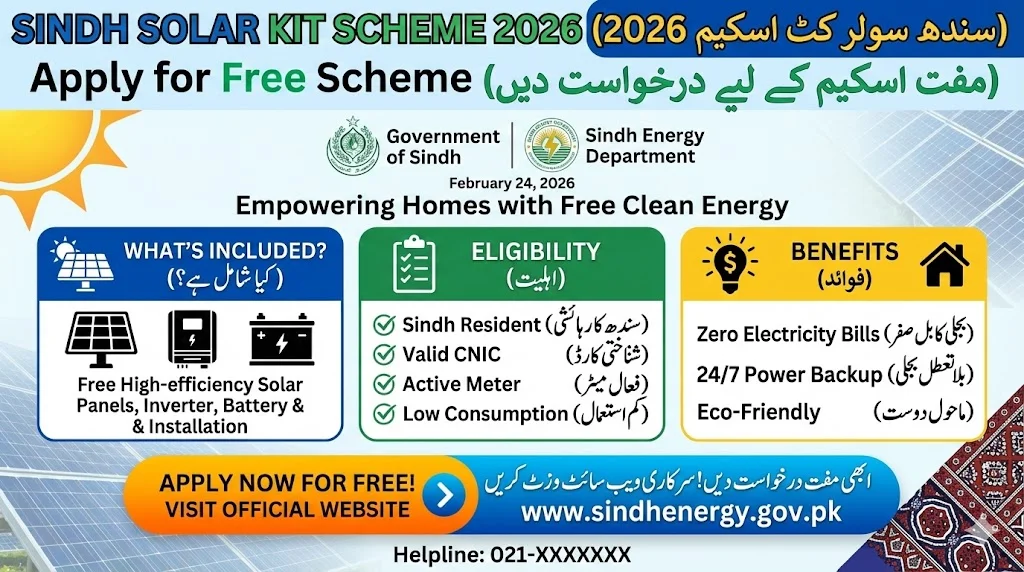
The solar kits distributed through the program typically include:
- A solar panel for generating electricity
- A rechargeable battery for storing energy
- LED bulbs for lighting
- A controller system for regulating power supply
- Mobile phone charging ports
These systems allow households to generate electricity using sunlight, providing a clean and sustainable energy solution.
Since the launch of the project, more than 170,000 solar kits have already been distributed to families across Sindh, improving the lives of thousands of people living in remote communities.
Objectives of the Sindh Solar Home System Program
The Sindh Solar Kit Scheme has several key objectives that aim to improve the living conditions of rural communities.
Expanding Energy Access
Many rural villages still lack access to the national electricity grid. The scheme helps bridge this gap by providing independent solar energy systems.
Supporting Low-Income Families
The program specifically targets households facing financial difficulties and provides them with free energy solutions.
Promoting Renewable Energy
Solar power is a clean and renewable energy source. The scheme encourages the use of environmentally friendly energy technologies.
Reducing Electricity Costs
Families using solar kits can significantly reduce their reliance on expensive fuel or electricity bills.
Improving Living Standards
Access to reliable electricity allows families to improve their quality of life by enabling better lighting, communication, and access to information.
Importance of Solar Energy for Rural Communities
Solar energy is particularly beneficial for rural communities where electricity infrastructure is limited or unavailable.
Traditional energy sources such as kerosene lamps and diesel generators are not only expensive but also produce harmful emissions.
Solar power offers several advantages:
- It is renewable and environmentally friendly
- It reduces household energy costs
- It provides reliable electricity even in remote areas
- It improves health by reducing indoor air pollution
- It supports education by providing better lighting for studying
By providing solar home systems to rural households, the Sindh government is helping communities transition toward clean and sustainable energy solutions.
Eligibility Criteria for the Sindh Solar Kit Scheme
To ensure that the solar kits reach families who need them the most, the government has established strict eligibility requirements.
Primary Eligibility Requirements
Applicants must meet the following conditions:
- Be residents of rural areas in Sindh
- Belong to a low-income household
- Possess a valid CNIC issued by NADRA
- Live in areas where electricity access is limited or unavailable
Priority Beneficiaries
The scheme prioritizes the following groups:
- Families registered with the Benazir Income Support Programme
- Households affected by the 2022 floods
- Residents of remote villages without electricity
- Low-income families living below the poverty line
These priority groups are selected because they face the greatest challenges in accessing reliable energy.
Solar Kit Distribution and Verification Process
To ensure transparency and fairness, the government has implemented a strict verification and distribution system.
Data Verification
Beneficiary data is cross-checked with national databases, including:
- BISP beneficiary records
- Disaster-affected household lists
- Population records from national databases
This process helps confirm that applicants meet the eligibility criteria.
Field Verification
In some cases, field teams visit villages to verify household conditions and confirm eligibility.
One Kit per Household Policy
To ensure fair distribution, each eligible household receives only one solar kit.
This policy prevents misuse and ensures that more families benefit from the program.
How to Apply for the Sindh Solar Kit Scheme
Many people search online for Sindh Solar Kit Scheme registration, but the process is usually handled through government surveys and partner organizations rather than a public online portal.
Application Methods
Eligible families may apply through the following channels:
- Local government offices in their district
- Field teams from HANDS Pakistan
- Community surveys conducted by program representatives
- Local help desks set up by the Sindh Energy Department
Applicants may need to provide identification documents and household information during the registration process.
Role of HANDS Pakistan in the Solar Kit Project
The HANDS Pakistan organization plays an important role in implementing the solar kit scheme.
Their responsibilities include:
- Identifying eligible households
- Conducting field surveys
- Distributing solar kits
- Providing technical guidance to beneficiaries
- Supporting installation and maintenance
By working closely with communities, HANDS Pakistan helps ensure that the solar systems are installed correctly and used effectively.
Components of the Solar Home System
Each solar kit provided under the scheme includes several essential components.
Solar Panel
The solar panel converts sunlight into electricity, allowing households to generate power during the day.
Battery Storage
The battery stores excess energy generated by the solar panel, enabling families to use electricity at night.
LED Lighting
Energy-efficient LED bulbs provide bright lighting while consuming minimal electricity.
Charging Ports
Solar kits often include ports that allow families to charge mobile phones and small electronic devices.
These components work together to provide a reliable and sustainable energy solution.
Impact of the Solar Kit Scheme on Rural Life
The Sindh Solar Kit Scheme has already improved the lives of many families living in rural areas.
Improved Education
Students can study at night under proper lighting, improving educational opportunities.
Better Communication
Mobile phone charging enables families to stay connected with relatives and access digital services.
Increased Safety
Reliable lighting reduces the risks associated with dark environments at night.
Economic Opportunities
Electricity allows households to operate small businesses such as mobile charging stations or small shops.
Sindh Bank Solar Finance Program
While the free solar kit scheme focuses on low-income families, the Sindh Bank Limited has introduced a Solar Finance Facility to help middle-income households invest in solar energy.
This program allows individuals and small businesses to install solar systems through affordable financing options.
Required Documents for Solar Financing
Applicants may need to provide:
- CNIC copy
- Recent electricity bills
- Proof of income
- Property ownership documents
This initiative expands access to renewable energy beyond the poorest households.
Contribution to Pakistan’s Renewable Energy Goals
The Sindh Solar Kit Scheme plays an important role in Pakistan’s national renewable energy strategy.
The country aims to increase solar energy production significantly in the coming years.
By distributing solar systems to rural households, the government helps reduce pressure on the national electricity grid while promoting clean energy solutions.
This initiative contributes to Pakistan’s long-term goal of achieving 45 gigawatts of solar capacity by 2030, which will strengthen the country’s energy security and reduce reliance on fossil fuels.
Safety Tips to Avoid Fake Solar Scheme Registrations
Whenever government programs become popular, fraudulent websites and individuals may attempt to exploit applicants.
How to Protect Yourself
- Only trust information from official government offices
- Avoid sharing personal details with unknown websites
- Do not pay any registration fees
- Verify details through local authorities or program representatives
Official solar kit programs are typically free for eligible households.
Frequently Asked Questions (FAQs)
What is the Sindh Solar Kit Scheme?
It is a government program that provides free solar home systems to low-income households in rural Sindh.
Who is eligible for the scheme?
Priority is given to BISP beneficiaries, flood-affected families, and residents of remote villages without electricity.
Is the solar kit completely free?
Yes, eligible households receive the solar kits free of cost.
What equipment is included in the solar kit?
The kit usually includes a solar panel, battery, LED lights, and charging ports.
How can I apply for the scheme?
Applications are typically processed through government surveys, local offices, or partner organizations such as HANDS Pakistan.
Conclusion
The Sindh Solar Kit Scheme 2026 represents a major step toward improving energy access for rural communities. By providing free solar home systems to vulnerable households, the government is helping thousands of families gain access to reliable electricity for the first time.
This initiative not only improves daily living conditions but also promotes renewable energy adoption, reduces electricity costs, and supports long-term environmental sustainability.
Through collaboration between the Sindh Energy Department, HANDS Pakistan, and financial institutions such as Sindh Bank Limited, the program is creating new opportunities for communities across Sindh.
As the scheme continues to expand, it will play a crucial role in building a cleaner, more sustainable, and energy-secure future for Pakistan.