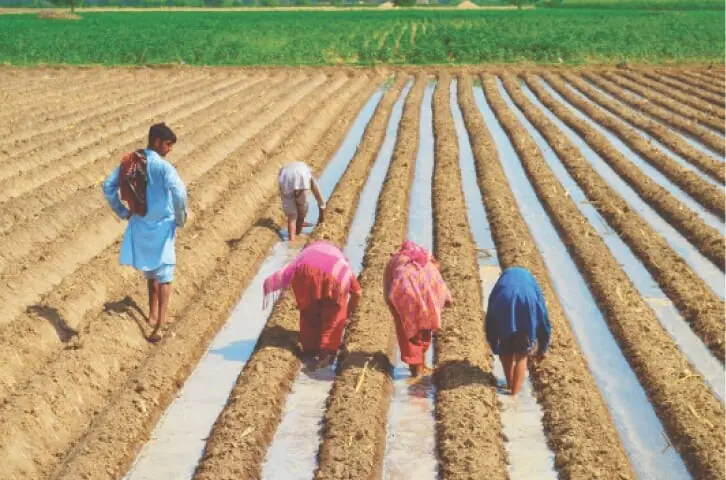
Sindh Cabinet Approves Equal Wages and Maternity Benefits for Women Farm Workers The provincial cabinet of Sindh has approved a historic policy aimed at protecting and empowering women working in the agriculture sector. Under the newly approved Sindh Agriculture Women Workers Rules, female farm workers will now be entitled to equal wages, maternity facilities, and protection from harassment and discrimination.
The decision was taken during a cabinet meeting in Karachi, where senior government officials discussed several important reforms related to labour rights, education monitoring, infrastructure development, and healthcare expansion. The announcement was made by Sharjeel Inam Memon, the Senior Minister of Sindh, who briefed journalists about the key decisions taken during the meeting.
This new policy represents a major step toward recognizing the contributions of women in agriculture and ensuring their rights are protected under provincial law.
A Landmark Step for Women in Agriculture
Women play a critical role in the agriculture sector across Pakistan, particularly in rural areas where they are involved in farming, livestock care, fisheries, and food production. Despite their significant contribution, women agricultural workers have historically received lower wages and limited workplace protections.
The Sindh cabinet’s approval of the Sindh Agriculture Women Workers Rules aims to address these inequalities by introducing several protections and benefits for women working in farms and related sectors.
According to Sharjeel Inam Memon, the rules formally acknowledge women’s contribution to agriculture and ensure that they receive the same wages as male workers for equal work. In addition, the policy includes provisions for maternity benefits and legal safeguards against workplace harassment and discrimination.
The government described this step as a groundbreaking initiative that has not previously been implemented at such a scale in Pakistan.
Equal Wages for Women Agricultural Workers
One of the most significant features of the newly approved rules is the guarantee of equal wages for women farm workers.
For decades, women working in agricultural fields have often been paid less than men despite performing similar tasks. These wage disparities have contributed to economic inequality and limited financial independence for rural women.
Under the new regulations:
- Women agricultural workers must receive the same wages as men for the same work.
- Employers will be required to follow fair wage policies.
- Authorities will monitor compliance to ensure that women workers are not exploited.
The introduction of equal pay policies aims to create a more balanced and fair agricultural labour market.
By ensuring wage equality, the Sindh government hopes to improve the financial stability of thousands of rural women who depend on farm work for their livelihood.
Maternity Facilities and Workplace Protection
Another important feature of the policy is the provision of maternity facilities for women agricultural workers.
Women working in farms often continue working during pregnancy due to financial necessity. However, without maternity protections, this can pose serious health risks for both mothers and newborns.
The new rules aim to address this issue by introducing maternity benefits and protections that allow women workers to access necessary support during pregnancy and childbirth.
Key maternity-related provisions may include:
- Paid or protected maternity leave
- Job security during pregnancy
- Health and safety considerations for pregnant workers
In addition to maternity benefits, the rules also include strong legal protections against harassment and discrimination.
Women working in agriculture will now have the right to report harassment or unfair treatment without fear of losing their jobs.
This policy aims to create safer working environments for women across farms, livestock operations, and fisheries.
Benazir Women Agriculture Workers Card
Another major initiative approved by the cabinet is the Benazir Women Agriculture Workers Card.
This card will be issued to women working in the agriculture sector to formally recognize them as part of the labour force and allow them to access government welfare programs.
The card is expected to provide several benefits, including:
- Identification as registered agricultural workers
- Access to government welfare programs
- Eligibility for financial assistance schemes
- Inclusion in labour protection initiatives
By introducing the card, the government aims to bring women agricultural workers into the formal economic system and ensure that they receive social protection benefits.
The initiative reflects the broader goal of empowering rural women and improving their socio-economic conditions.
Rs500 Million Endowment Fund for Women Workers
To support the welfare of women farm workers, the Sindh cabinet also approved the establishment of an endowment fund worth Rs500 million.
The fund will be dedicated to improving the working conditions and welfare of women involved in agriculture and related sectors.
The welfare fund may be used for various purposes, including:
- Health and maternity support for women workers
- Financial assistance for low-income female agricultural labourers
- Training and development programs
- Social protection and welfare initiatives
According to Sharjeel Inam Memon, the government believes that empowering women is a key responsibility and that such initiatives will help ensure their protection and economic participation.
International Support from the International Labour Organization
The development of the Sindh Agriculture Women Workers Rules was carried out with technical assistance from the International Labour Organization.
The involvement of the International Labour Organization ensured that the rules align with international labour standards related to gender equality and workers’ rights.
ILO experts provided guidance in drafting the policy to ensure that it includes strong protections for women workers in the agriculture sector.
By incorporating international best practices, the Sindh government aims to set an example for other provinces in Pakistan.
Digital System to Monitor Student Attendance
In addition to labour reforms, the Sindh cabinet also approved a technology-based education initiative known as the Student Attendance Monitoring and Redress System (SAMRS).
This system is designed to tackle student absenteeism and reduce school dropout rates across the province.
According to officials, the SAMRS system will introduce:
- A mobile application for tracking student attendance
- A digital dashboard for monitoring enrolment and attendance data
- Data analysis tools to identify factors affecting student attendance
The system will be implemented across schools managed by the Sindh Education and Literacy Department, the Sindh Education Foundation, and other education management organizations.
Authorities expect the system to be implemented across all schools in Sindh within one year.
Addressing School Dropout Rates
The Student Attendance Monitoring and Redress System will also help identify students who are at risk of dropping out of school.
Through data analysis and monitoring, education authorities will be able to implement targeted interventions such as:
- Counselling programs for students
- Peer support initiatives
- Community engagement strategies
- Early identification of absenteeism patterns
These efforts aim to improve school attendance and ensure that more children complete their education.
Education officials believe that technology-based monitoring systems can significantly improve accountability within the education sector.
Infrastructure Development Reforms
The cabinet also approved amendments to the Sindh Development and Maintenance of Infrastructure Cess (Second Amendment) Act, 2026.
This decision was made after consultations with the business community and aims to streamline the collection and use of infrastructure development funds.
The cess is used to finance important development projects such as:
- Industrial infrastructure
- Transportation networks
- Road maintenance
- Logistics facilities
By improving the management of infrastructure funds, the government hopes to support economic growth and business development across Sindh.
Wheat Release Policy to Stabilize Prices
Another important decision taken by the cabinet was the expansion of the wheat release policy.
Previously, government wheat stocks were primarily supplied to flour mills and traditional grain processors known as chakkis.
Under the revised policy, private traders will also be allowed to purchase wheat from government stocks.
Licensed traders will receive wheat at the official government rate of Rs8,000 per 100-kg bag.
Officials stated that approximately 300,115 metric tons of wheat are currently available for release.
The wheat sales could generate nearly Rs30.398 billion, which would help reduce the province’s wheat debt of Rs109.405 billion.
This policy is intended to stabilize wheat prices and improve the supply of flour in the market.
Expansion of Healthcare Facilities
The Sindh cabinet also approved the allocation of land and financial support for healthcare development projects.
One major decision involved the allotment of four acres of state land in Deh Khanto, Taluka Ibrahim Hyderi, District Malir.
The land will be used to establish a nursing school connected to Hasan Suleman Memorial Hospital.
In addition, the cabinet approved financial assistance of $7.6 million (approximately Rs2.14 billion) for the hospital’s expansion project.
The hospital’s covered area has increased from 250,000 square feet to 325,000 square feet, which led to higher construction costs.
Improved Healthcare Services for Karachi
The 312-bed tertiary care hospital located on the National Highway (N-5) will provide specialized medical services to residents of Karachi and nearby districts.
The funding for the project will be released during the 2026-27 fiscal year, subject to a matching contribution from the Hasan Suleman Foundation.
The hospital is expected to significantly improve healthcare access for communities living along the National Highway and surrounding rural areas.
Key Judicial and Institutional Appointments
During the meeting, the cabinet also approved several appointments to strengthen key institutions in Sindh.
These included the appointment of Irshad Ali Shah (Retired Justice) as the chairperson of the Sindh Revenue Board Appellate Tribunal.
In addition, presiding officers were appointed for several Anti-Terrorism Courts across the province.
These appointments include:
- Irshad Dharejo for the ATC in Kashmore at Kandhkot
- Aijaz Chandio for the ATC in Naushehro Feroze
- Ayaz Hussain Marri for the ATC in Dadu
These appointments aim to strengthen the judicial system and improve the efficiency of legal institutions across Sindh.
A Major Policy Shift Toward Social Protection
The Sindh cabinet’s recent decisions reflect a comprehensive approach to social and economic development.
From protecting women agricultural workers to introducing digital education monitoring systems and improving healthcare infrastructure, the government is taking steps to address multiple challenges facing the province.
Among these initiatives, the Sindh Agriculture Women Workers Rules stand out as a historic policy that recognizes the rights and contributions of women in agriculture.
By guaranteeing equal wages, maternity benefits, and legal protections, the policy could significantly improve the working conditions of thousands of female farm workers.
Conclusion
The approval of the Sindh Agriculture Women Workers Rules marks a significant milestone in promoting gender equality and labour rights in Sindh.
Announced by Sharjeel Inam Memon, the new policy ensures that women agricultural workers receive equal pay, maternity benefits, and protection from harassment and discrimination.
Alongside the introduction of the Benazir Women Agriculture Workers Card and the Rs500 million welfare fund, the initiative reflects the government’s commitment to empowering women and improving their economic opportunities.
Combined with reforms in education, infrastructure, healthcare, and agriculture, these measures represent a broader strategy to strengthen social protection systems and promote sustainable development across the province.
If successfully implemented, these policies could transform the lives of thousands of women working in farms, livestock operations, and fisheries, paving the way for a more inclusive and equitable future in Sindh.