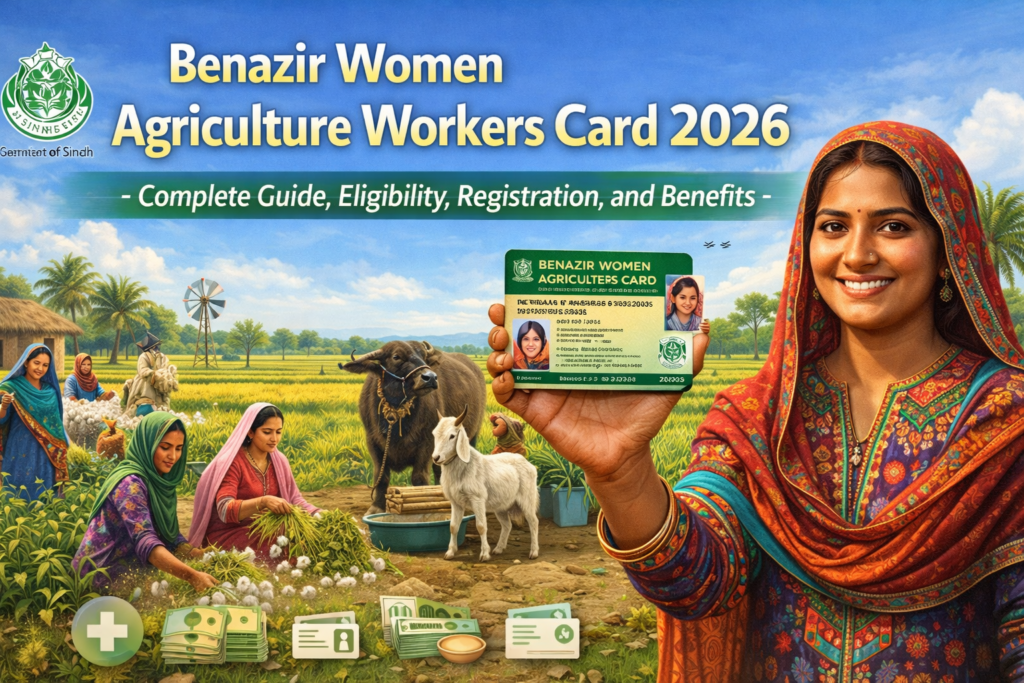
The Benazir Women Agriculture Workers Card 2026 is a landmark initiative launched by the Government of Sindh to recognize, support, and empower women working in agriculture, livestock, and fisheries. For decades, women have played a crucial role in Pakistan’s rural economy, yet their contributions often remained undocumented and undervalued. With the introduction of this card, the government aims to provide legal recognition, financial support, and social protection to thousands of women farm workers across the province.
The initiative was announced after approval by the provincial cabinet and highlighted by senior minister Sharjeel Inam Memon, who emphasized the importance of empowering women and ensuring their rights in the agricultural sector. The program is designed to provide benefits such as worker registration, welfare assistance, maternity protection, and access to government schemes.
In this comprehensive SEO guide, we will explain everything you need to know about the Benazir Women Agriculture Workers Card 2026, including eligibility criteria, benefits, registration process, required documents, and its potential impact on rural women in Pakistan.
What Is the Benazir Women Agriculture Workers Card 2026?
The Benazir Women Agriculture Workers Card is a government-issued identification and welfare card designed specifically for women who work in agriculture-related sectors.
These sectors include:
- Crop farming
- Livestock management
- Dairy production
- Fisheries and aquaculture
- Agricultural labor and harvesting
Many women in rural Pakistan work long hours in fields and farms but remain outside formal labour systems. The introduction of the card aims to bring these women into the official labour registry so they can access government support programs.
The card is named in honor of Benazir Bhutto, Pakistan’s first female prime minister and a strong advocate for women’s rights and empowerment.
Why the Benazir Women Agriculture Workers Card Is Important
Agriculture is one of the largest sectors of Pakistan’s economy, employing millions of workers. A significant portion of this workforce consists of women, particularly in rural areas of Sindh.
Despite their contribution, women agricultural workers face several challenges:
- Lack of legal recognition
- Unequal wages compared to male workers
- Limited access to financial services
- No maternity benefits or labour protections
- Poor working conditions
The Benazir Women Agriculture Workers Card aims to address these challenges by providing official recognition and ensuring access to welfare benefits.
This initiative is considered one of the most important reforms for women in the agricultural sector in Pakistan.
Objectives of the Benazir Women Agriculture Workers Card Program
The main objective of the program is to improve the socio-economic conditions of women working in agriculture.
Key goals include:
1. Recognition of Women Workers
The program will formally recognize women who work in agriculture and related sectors.
2. Financial and Social Protection
Cardholders will be able to access government welfare programs and financial assistance.
3. Gender Equality in Agriculture
The initiative aims to ensure equal wages and better working conditions for women.
4. Improved Data Collection
The card will help the government maintain accurate data on women agricultural workers.
5. Poverty Reduction
By supporting women workers, the program aims to reduce poverty in rural communities.
Key Benefits of the Benazir Women Agriculture Workers Card
Women who receive the card will gain access to several benefits and support programs.
1. Legal Recognition as Agricultural Workers
Many women working in agriculture are not officially recognized as workers. The card provides formal recognition, allowing them to access labour rights and protections.
2. Access to Welfare Programs
Cardholders may become eligible for government welfare schemes, financial aid, and social protection programs.
3. Equal Wage Protection
The card supports policies that ensure women receive equal wages for equal work.
4. Maternity Benefits
Women agricultural workers may receive maternity benefits and workplace protections during pregnancy.
5. Training and Skill Development
The program may include agricultural training programs to help women improve productivity and income.
6. Financial Assistance
Cardholders could receive support through grants, subsidies, or microfinance programs.
7. Access to Government Subsidies
Women workers may receive agricultural subsidies such as seeds, fertilizers, and livestock support.
Eligibility Criteria for the Benazir Women Agriculture Workers Card 2026
Not every applicant will automatically qualify for the card. The government has established eligibility criteria to ensure that the program benefits genuine agricultural workers.
To qualify for the card, applicants must generally meet the following conditions:
- Must be a woman working in agriculture, livestock, or fisheries
- Must be a resident of Sindh
- Must possess a valid CNIC issued by National Database and Registration Authority
- Must belong to a low-income or working-class household
- Must be actively engaged in farming or agricultural labour
Priority may be given to:
- Widows working in agriculture
- Women-headed households
- Women from poor rural communities
Required Documents for Registration
Women applying for the card will likely need to provide certain documents to verify their eligibility.
Commonly required documents include:
- Copy of CNIC
- Proof of residence
- Agricultural work verification
- Family information
- Contact phone number
Local authorities may also conduct field verification to confirm that applicants are actively engaged in agricultural work.
How to Apply for the Benazir Women Agriculture Workers Card 2026
The government is expected to introduce a structured registration process for the program.
Below is a general step-by-step guide that applicants may follow.
Step 1: Visit the Local Agriculture Office
Applicants should visit the nearest agriculture department office or government registration center.
Step 2: Obtain the Registration Form
Women workers will need to fill out an application form with their personal and work details.
Step 3: Submit Required Documents
Applicants must attach copies of required documents such as CNIC and proof of agricultural work.
Step 4: Verification Process
Government officials may verify the information provided by applicants through surveys or field visits.
Step 5: Card Issuance
Once the verification process is complete, eligible applicants will receive the Benazir Women Agriculture Workers Card.
Role of the Sindh Government in the Program
The Government of Sindh is responsible for implementing the card program through various departments.
Key departments involved include:
- Livestock and Fisheries Department
- Agriculture Department
- Social Welfare Department
These departments will coordinate to ensure smooth implementation of the program.
International Support and Labour Standards
The policy framework for protecting women agricultural workers was developed with technical support from the International Labour Organization.
The International Labour Organization provides guidance on labour rights, workplace safety, and gender equality.
By incorporating international standards, the program aims to ensure that women agricultural workers receive fair treatment and protection.
Impact on Women Empowerment
The Benazir Women Agriculture Workers Card has the potential to transform the lives of thousands of women working in rural communities.
Key impacts may include:
Economic Empowerment
Women workers will have better access to income opportunities and financial support.
Improved Social Status
Official recognition of women workers can improve their status within communities.
Better Working Conditions
The program promotes labour rights and workplace protections.
Increased Access to Government Programs
Women will be able to benefit from multiple government initiatives designed to support rural development.
Challenges in Implementing the Program
While the program offers many benefits, its success will depend on effective implementation.
Some potential challenges include:
- Identifying genuine agricultural workers
- Ensuring transparency in registration
- Providing adequate funding for welfare programs
- Raising awareness among rural women
To overcome these challenges, the government will need to implement strong monitoring and outreach strategies.
Future Prospects for Women in Agriculture
The Benazir Women Agriculture Workers Card could serve as a model for similar initiatives across Pakistan.
If successful, the program may be expanded to other provinces to support women working in agriculture nationwide.
Future developments may include:
- Digital registration systems
- Mobile applications for worker support
- Expanded financial assistance programs
- Agricultural training initiatives
Such measures could significantly improve the livelihoods of women in rural communities.
Frequently Asked Questions (FAQs)
What is the Benazir Women Agriculture Workers Card?
It is a government-issued welfare card designed to recognize and support women working in agriculture, livestock, and fisheries.
Who can apply for the card?
Women working in agriculture or related sectors in Sindh who meet the eligibility criteria can apply.
Is the card free?
Yes, the card is expected to be issued free of cost to eligible women agricultural workers.
What benefits will cardholders receive?
Benefits may include worker recognition, welfare support, maternity benefits, training programs, and access to government schemes.
How can women apply for the card?
Applications will likely be submitted through local agriculture offices or designated government registration centers.
Conclusion
The Benazir Women Agriculture Workers Card 2026 represents a major step toward recognizing and empowering women in the agricultural sector. By providing legal recognition, welfare benefits, and workplace protections, the program aims to improve the lives of thousands of women working in farms, livestock operations, and fisheries across Sindh.
With strong support from government departments and international organizations such as the International Labour Organization, the initiative has the potential to promote gender equality and sustainable development in rural communities.
If implemented effectively, the program could become a model for agricultural labour reforms across Pakistan, ensuring that women workers finally receive the recognition, protection, and opportunities they deserve.