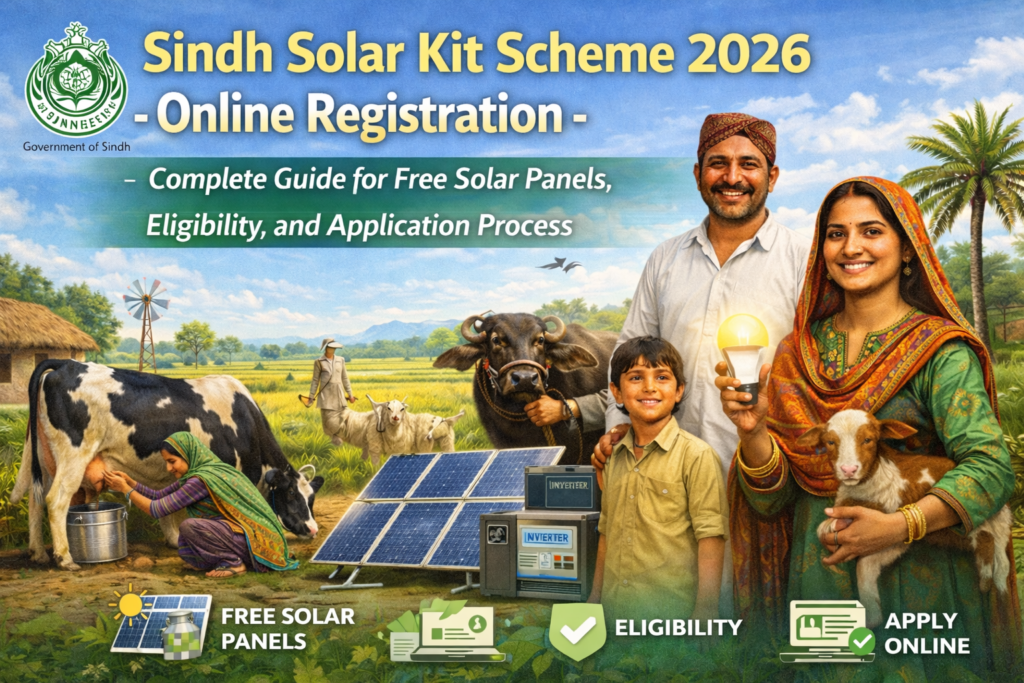
Sindh Solar Kit Scheme 2026 Online Registration – Complete Guide for Free Solar Panels, Eligibility, and Application Process The Sindh Solar Kit Scheme 2026 is one of the largest renewable energy initiatives launched by the Government of Sindh to provide electricity access to low-income and off-grid households. Through this program, the provincial government aims to distribute 200,000 Solar Home Systems (SHS) to deserving families, particularly those affected by poverty and natural disasters.
In collaboration with HANDS Pakistan and supported by the World Bank, this scheme focuses on bringing clean and affordable electricity to remote areas where traditional power infrastructure is limited or unavailable.
By early 2026, more than 170,000 solar kits have already been distributed, and the government has opened the second phase of registration for the remaining eligible households.
This detailed guide explains everything you need to know about the Sindh Solar Kit Scheme 2026, including eligibility criteria, online registration steps, required documents, benefits, and frequently asked questions.
What Is the Sindh Solar Kit Scheme 2026?
The Sindh Solar Kit Scheme 2026 is a government initiative designed to provide free solar home systems to low-income households across the province.
The program primarily targets:
- Families enrolled in the Benazir Income Support Programme (BISP)
- Households affected by the 2022 floods
- Rural communities without electricity connections
The goal of the program is to reduce energy poverty and promote the use of renewable energy sources.
Overview of the Sindh Solar Panel Scheme 2026
Below is a quick overview of the scheme:
| Feature | Details |
|---|---|
| Scheme Name | Sindh Solar Kit Scheme 2026 |
| Total Target | 200,000 households |
| Distributed Kits | Over 170,000 (by early 2026) |
| Beneficiaries | BISP families and flood victims |
| Implementing Partners | Sindh Energy Department & HANDS Pakistan |
| Kit Components | Solar panel, battery, fan, LED lights, mobile charger |
| Cost | Completely free for eligible families |
The scheme is part of Sindh’s long-term plan to expand renewable energy access in rural communities.
Why the Sindh Government Launched the Solar Kit Scheme
Many villages in Sindh still lack reliable electricity. Even in areas with grid connections, frequent power outages make daily life difficult.
The solar kit scheme was introduced to solve several major problems:
- Lack of electricity in rural areas
- High electricity bills for low-income households
- Dependence on unsafe kerosene lamps
- Limited opportunities for education and business activities
By distributing solar kits, the government hopes to improve living conditions and reduce energy poverty.
What Is Included in the Solar Home System (SHS)?
Each beneficiary household receives a complete solar energy kit designed for basic household electricity needs.
Solar Kit Components
The solar system typically includes:
- Solar panel
- Rechargeable battery
- Three LED bulbs
- One energy-efficient fan
- Mobile phone charging port
- Basic wiring and installation support
These systems provide enough electricity for lighting, charging phones, and running small appliances.
Target Beneficiaries of the Scheme
The Sindh Solar Kit Scheme focuses on helping the most vulnerable communities.
Primary Beneficiaries
The following groups are prioritized:
- Families registered under the Benazir Income Support Programme (BISP)
- Victims of the 2022 floods in Sindh
- Rural households without electricity connections
- Families living below the poverty line
These groups were selected because they face the greatest challenges in accessing reliable electricity.
Eligibility Criteria for Sindh Solar Kit Scheme 2026
To qualify for the program, applicants must meet several eligibility conditions set by the Sindh government.
Main Eligibility Requirements
Applicants must:
- Be a resident of Sindh province
- Have a valid Computerized National Identity Card (CNIC)
- Be registered in the BISP database
- Have a PMT score below 32 in the poverty registry
- Live in an area without reliable electricity access
Flood-Affected Areas
Families living in areas officially declared flood-affected during the 2022 monsoon season are also given priority.
What Is the PMT Score?
The Poverty Means Test (PMT) score is used by the government to determine whether a household qualifies for social welfare programs.
This score is calculated based on:
- Household income
- Number of family members
- Housing conditions
- Education level
- Employment status
Families with PMT scores below 32 are considered eligible for many poverty relief programs.
Sindh Solar Kit Scheme 2026 Online Registration Process
The registration process involves online verification and field surveys to ensure transparency.
Below is a step-by-step guide to apply.
Step 1 – Check Eligibility through BISP 8171
Since the scheme uses the BISP database, the first step is to confirm your eligibility.
How to Check Eligibility
- Visit the 8171 web portal.
- Enter your CNIC number.
- Complete the verification process.
- Check your eligibility status.
If you are listed in the BISP database, you may qualify for the solar kit scheme.
Step 2 – Visit the Official Sindh Solar Portal
The Sindh Energy Department occasionally opens an online portal for solar kit applications.
Application Steps
- Visit the official website of the Sindh Energy Department.
- Look for the Solar Home System (SHS) Registration 2026 section.
- Enter your personal details.
- Provide your CNIC number and address.
- Submit the application form.
Once submitted, your application will be reviewed by government authorities.
Step 3 – Registration through HANDS Pakistan
In many rural areas, the distribution process is managed by HANDS Pakistan, a development organization working with the Sindh government.
Door-to-Door Verification
HANDS teams conduct:
- Household surveys
- Biometric verification
- CNIC confirmation
- Poverty assessments
Residents may also visit local HANDS field offices to register their names.
Documents Required for Solar Kit Registration
Applicants must prepare several documents before applying.
Required Documents
You may need:
- Original CNIC of the head of the household
- BISP or Kafalat program card
- Proof of residence (domicile or utility bill)
- Registered mobile phone number
Providing accurate documents helps speed up the verification process.
Solar Financing Option for Non-Eligible Families
Not all families qualify for the free solar kit. However, the Sindh government has introduced another option for middle-income households.
Solar Finance Facility
Through Sindh Bank Limited, families can obtain loans to install solar systems.
Loan Features
- Solar systems for homes and small businesses
- Systems ranging from 3KW to 5KW capacity
- Affordable monthly installment plans
- Simple application process
This option allows more families to benefit from renewable energy.
Benefits of the Sindh Solar Kit Scheme
The solar kit distribution program provides numerous benefits to rural communities.
Key Advantages
1. Zero Electricity Bills
Families can generate their own electricity without paying monthly utility bills.
2. Better Education Opportunities
Children can study at night under reliable LED lighting.
3. Improved Safety
Solar lighting increases safety in homes and villages during nighttime.
4. Health Benefits
The program reduces reliance on kerosene lamps, which can produce harmful smoke.
5. Environmental Protection
Solar energy reduces carbon emissions and promotes clean energy.
Impact of the Solar Kit Scheme on Rural Communities
The distribution of more than 170,000 solar kits has already created a significant impact.
Economic Benefits
- Reduced household expenses
- Increased productivity in rural areas
- Support for small businesses
Social Benefits
- Better living standards
- Increased access to electricity
- Improved quality of life
These improvements help communities move toward sustainable development.
Government’s Renewable Energy Vision
The Sindh government plans to expand renewable energy programs across the province.
Future initiatives may include:
- Solar power for schools
- Solar irrigation systems for farmers
- Solar mini-grids for remote villages
These efforts will help Sindh move toward clean and sustainable energy solutions.
Common Problems During Registration
Some applicants may face issues during registration.
Common Issues
| Problem | Solution |
|---|---|
| CNIC not found | Confirm BISP registration |
| Application rejected | Check PMT score eligibility |
| No confirmation message | Wait for verification SMS |
| Incomplete form | Re-submit correct details |
Ensuring correct information improves your chances of approval.
Tips for Successful Registration
Follow these tips to increase your chances of being selected.
Helpful Tips
- Ensure your CNIC is valid
- Confirm your BISP registration status
- Provide accurate household information
- Keep your mobile number active
Avoid paying agents or middlemen because registration is completely free.
Frequently Asked Questions (FAQs)
What is the Sindh Solar Kit Scheme 2026?
It is a government program that provides free solar home systems to low-income households in Sindh.
Who is eligible for the scheme?
Priority is given to:
- BISP beneficiaries
- Flood-affected families
- Off-grid rural households
How many households will benefit?
The government aims to distribute 200,000 solar kits.
Is there any registration fee?
No. Registration for the solar kit scheme is completely free.
How will I know if I am selected?
Selected applicants will receive an SMS notification from the government or HANDS Pakistan.
Can I apply if I am not a BISP beneficiary?
The free solar kit is mainly for BISP families. However, you can apply for solar financing through Sindh Bank.
What if I already have electricity?
Priority is given to households without electricity connections.
Final Thoughts
The Sindh Solar Kit Scheme 2026 represents a major step toward energy accessibility and sustainable development. By providing free solar home systems to low-income families, the government is helping thousands of households gain reliable electricity for the first time.
The partnership between the Sindh Energy Department, HANDS Pakistan, and the World Bank ensures that the program reaches the most deserving families in rural communities.
With more than 170,000 solar kits already distributed, the scheme is already transforming lives by reducing electricity costs, improving education opportunities, and promoting clean energy.
If you belong to an eligible household, completing the registration process through BISP verification or the official portal may help you secure a solar kit and enjoy a brighter, energy-independent future.
For the latest updates on Sindh government schemes and solar programs in 2026, keep following official announcements and stay informed about upcoming registration opportunities.