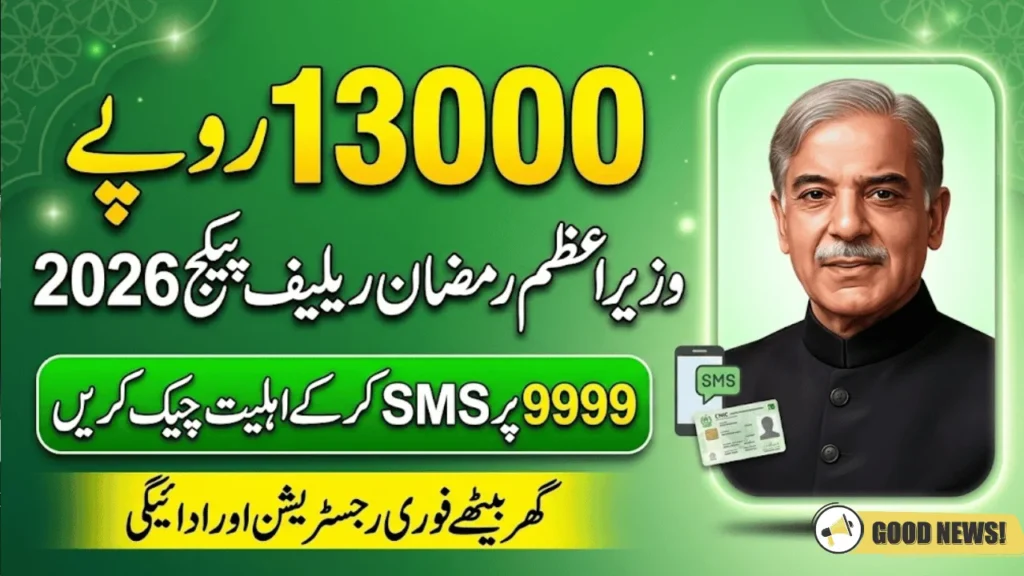
PM Ramzan 13000 Payment Scheme 2026 – Complete 9999 SMS Eligibility Check Guide Preparing for the holy month of Ramadan is a time of spiritual reflection, charity, and community for Muslims across Pakistan. However, for many families, especially those living on limited income, Ramadan can also bring significant financial challenges. Prices of essential food items such as flour, cooking oil, sugar, rice, and pulses often rise during this period, making it difficult for low-income households to manage daily expenses.
To support vulnerable families, the Government of Pakistan introduced the PM Ramzan 13000 Payment Scheme 2026, a financial relief program designed to provide direct cash assistance during Ramadan. Under this initiative, eligible families receive Rs. 13,000 to help cover the cost of essential groceries and household items.
One of the most convenient features of the 2026 program is the 9999 SMS eligibility verification system, which allows citizens to check their eligibility from home using a mobile phone. This digital approach reduces the need to visit government offices and makes the process faster and more transparent.
This comprehensive guide explains everything you need to know about the scheme, including eligibility criteria, how to check your CNIC through the 9999 SMS service, payment distribution methods, and useful tips to avoid delays.
Overview of the PM Ramzan 13000 Payment Scheme 2026
The PM Ramzan Relief Package 2026 is a government initiative created to provide temporary financial support to low-income households before or during Ramadan. The main goal of the program is to help families manage rising food costs during the holy month.
Unlike older ration distribution systems that relied on physical food packages, this program focuses on direct cash transfers. By giving beneficiaries money instead of specific items, families can decide how best to use the assistance based on their individual needs.
For example:
- A large family may use the funds to purchase wheat flour, rice, and cooking oil.
- A household with young children may prioritize milk, fruits, and nutritious food.
- A widow managing a small household might spend the funds on groceries and utilities.
This flexible approach ensures that financial assistance is used in the most beneficial way for each family.
Key Features of the Ramzan Relief Program
Below are the main highlights of the scheme:
| Program Feature | Details |
|---|---|
| Program Name | PM Ramzan Relief Package 2026 |
| Financial Assistance | Rs. 13,000 |
| Eligibility Check | SMS to 9999 or online portal |
| Target Beneficiaries | Low-income households |
| Coverage | All provinces of Pakistan |
| Payment Type | Non-refundable government grant |
| Distribution | Banks, payment centers, and biometric agents |
The scheme is available nationwide, meaning families living in both urban cities and rural villages can benefit from the program.
Why the Government Introduced the 9999 SMS System
One of the major challenges in social welfare programs is accessibility. Many citizens, particularly those living in rural areas, do not have reliable internet access or the ability to navigate online portals.
To solve this problem, the government introduced the 9999 SMS verification system.
This system allows citizens to check their eligibility using any mobile phone by simply sending their CNIC number.
Advantages of the SMS Verification System
The SMS service provides several benefits:
- Quick eligibility confirmation
- No internet connection required
- Reduced crowding at government offices
- Simple process for people with basic mobile phones
- Faster application verification
For example, a person living in a remote village can check eligibility within seconds without traveling to the nearest city.
How to Check Eligibility Through 9999 SMS
Checking your eligibility through the 9999 SMS service is very simple and takes less than a minute.
Step-by-Step Guide
- Open the SMS or messaging application on your mobile phone.
- Type your 13-digit CNIC number.
- Make sure the CNIC number is entered without spaces or dashes.
- Send the message to 9999.
- Wait for a reply message showing your eligibility result.
In most cases, the response arrives within a few minutes.
Types of SMS Responses You May Receive
After sending your CNIC number to 9999, the system will reply with one of the following messages:
| SMS Response | Meaning |
|---|---|
| Eligible | Your household qualifies for the program |
| Under Verification | Your data is still being checked |
| Not Eligible | You do not meet the program criteria |
| Data Not Found | Your CNIC is not available in the database |
If you are eligible, the message will usually include further instructions regarding payment collection.
Who Is Eligible for the Rs. 13,000 Assistance?
The program focuses on supporting households that face financial difficulties. The government uses national socioeconomic data to identify families that need assistance the most.
Groups Most Likely to Qualify
The following categories are commonly eligible:
- Daily wage laborers
- Unemployed individuals
- Widows and single mothers
- Persons with disabilities
- Families registered in the National Socioeconomic Registry
- Low-income households with limited resources
These groups are particularly vulnerable to rising food prices during Ramadan.
Key Eligibility Conditions
To qualify for the PM Ramzan Relief Scheme, applicants generally must meet the following conditions.
1. Low Household Income
The program prioritizes families with limited monthly income who struggle to meet basic living expenses.
2. Valid CNIC
Applicants must possess a valid Computerized National Identity Card (CNIC) issued by the national registration authority.
3. Updated Household Data
Eligibility is often determined using information from national surveys. Households with updated data are more likely to be verified quickly.
4. Registered Mobile SIM
Ideally, the SIM card used to send the SMS should be registered under the same CNIC.
Who Is Usually Not Eligible?
To ensure fairness and prevent misuse of funds, the system automatically excludes individuals who do not meet the financial eligibility criteria.
Common disqualification factors include:
- High-income taxpayers
- Senior government employees
- Owners of luxury vehicles
- Individuals with large properties or businesses
- People with strong financial records in government databases
These checks are performed automatically through integrated government systems.
Why SMS Responses Sometimes Take Time
Although the SMS verification process is usually quick, some applicants may experience delays.
There are several reasons why this can happen.
High System Traffic
During peak periods, millions of people may send messages simultaneously. This heavy traffic can temporarily slow down the system.
Outdated Household Data
If your household information has not been updated recently, the system may take longer to verify your eligibility.
SIM Registration Issues
If the SIM card used to send the message is not registered under your CNIC, the system may flag the request for additional verification.
In most cases, responses are sent once the verification process is completed.
How Payments Are Distributed
After eligibility is confirmed, beneficiaries receive instructions about how to collect the Rs. 13,000 payment.
Payments are distributed through authorized financial institutions and designated relief centers across the country.
Common Payment Distribution Channels
Beneficiaries may collect their payments from:
- Government partner bank branches
- Special Ramzan relief camps
- Biometric retail agents
- Authorized financial service providers
- Digital payment systems
These distribution channels help ensure that funds reach beneficiaries safely and efficiently.
Documents Required for Payment Collection
When visiting a payment center or bank to collect your funds, you must bring the following documents:
- Original CNIC
- Registered mobile phone number
- Confirmation SMS message
- Biometric thumb verification
Biometric verification ensures that the money is delivered to the correct beneficiary and prevents fraud.
Step-by-Step Process to Collect the Rs. 13,000 Payment
If your application is approved, follow these steps to receive your payment.
Step 1: Receive Eligibility Confirmation
First, you will receive an SMS confirming that your household qualifies for the program.
This message may include instructions about the payment location.
Step 2: Prepare Your Documents
Ensure that you have your original CNIC and registered mobile number with you.
Step 3: Visit the Designated Payment Center
Go to the bank branch, relief center, or authorized agent mentioned in your SMS instructions.
Step 4: Complete Biometric Verification
Provide your thumbprint for biometric verification to confirm your identity.
Step 5: Receive Your Payment
Once verification is completed, you will receive the Rs. 13,000 cash payment along with a receipt.
Tips to Avoid Problems During Verification
Many applicants experience delays due to simple mistakes. Following these tips can help speed up the process.
- Always send your CNIC without spaces or dashes
- Use a SIM card registered under your own CNIC
- Avoid sending multiple messages from different numbers
- Make sure your CNIC is not expired
- Wait patiently for the SMS response
These small precautions can significantly improve your chances of a smooth verification process.
Advantages of the PM Ramzan Relief Scheme
The PM Ramzan 13000 Payment Scheme provides several benefits for vulnerable households.
Major Benefits
- Provides immediate financial relief during Ramadan
- Cash assistance allows flexible spending
- SMS verification makes the program accessible nationwide
- Digital systems improve transparency
- Reduces corruption and middlemen involvement
For many families, this support can make Ramadan more manageable and less financially stressful.
Possible Limitations of the Program
Despite its advantages, the scheme may also face certain challenges.
These include:
- Eligibility depends on existing government data
- Some households may have outdated survey information
- SMS responses may be delayed during peak periods
- Limited funds may restrict the number of beneficiaries
However, the program remains one of the most accessible relief initiatives available.
Future of Digital Welfare Programs in Pakistan
The PM Ramzan 13000 Payment Scheme reflects a broader shift toward digital welfare systems in Pakistan.
Government agencies are increasingly integrating national databases and technology to improve the delivery of social support programs.
Experts believe that future welfare programs may include:
- Digital wallet payments
- Real-time eligibility tracking
- Mobile applications for welfare services
- Faster biometric verification systems
- Integrated national data platforms
These developments aim to ensure that financial assistance reaches deserving households quickly and transparently.
Frequently Asked Questions
Is the Rs. 13,000 payment a loan?
No. The assistance is a government grant, meaning beneficiaries do not have to repay the money.
How long does it take to receive an SMS reply?
Most users receive a reply within a few minutes, but during peak hours it may take longer.
Can women apply for the scheme?
Yes. Women who are heads of households, widows, or single mothers are often prioritized.
Is there any fee for checking eligibility?
No. Checking eligibility through the 9999 SMS service is free except for standard SMS network charges.
Can I apply if I already receive other welfare assistance?
Some households receiving other social support programs may still qualify, depending on their eligibility status.
Final Thoughts
The PM Ramzan 13000 Payment Scheme 2026 represents an important step toward supporting families facing financial hardship during the holy month of Ramadan. With rising food prices and economic pressures affecting many households, direct cash assistance can provide meaningful relief.
By introducing the 9999 SMS eligibility verification system, the government has made the process easier and more accessible for citizens across the country. People can now check their eligibility quickly without visiting government offices or standing in long lines.
For families struggling to afford groceries during Ramadan, the Rs. 13,000 relief payment can help cover essential expenses such as flour, cooking oil, sugar, and rice.
If you believe your household qualifies, simply send your CNIC number to 9999 to check your eligibility. Following the official instructions and keeping your documents ready will help ensure a smooth payment process.
This initiative highlights the growing role of digital systems in delivering social welfare programs and represents an important step toward building a more efficient and transparent support system for vulnerable communities in Pakistan.