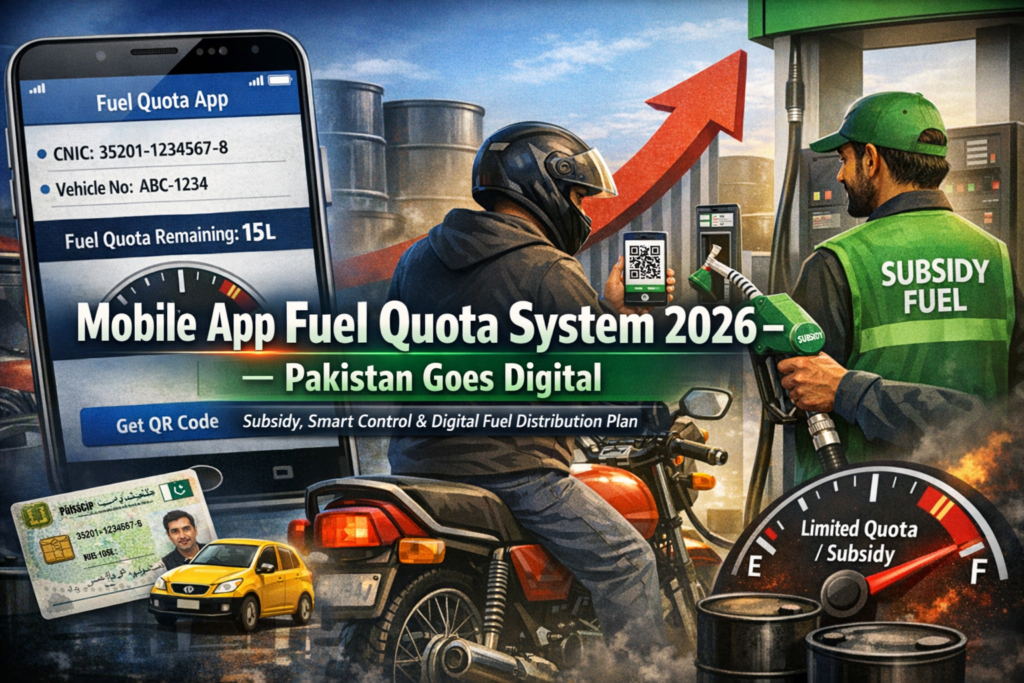
Mobile App-Based Fuel Quota System Finalised in Pakistan 2026 – Complete Details, Eligibility, Subsidy Plan & Impact In a major policy move amid the ongoing global energy crisis, the Government of Pakistan has finalized a mobile application-based fuel quota system aimed at providing targeted subsidies and controlling fuel consumption across the country.
The initiative, developed in collaboration with Oil and Gas Regulatory Authority (OGRA), the Ministry of Finance, Ministry of Petroleum, and the Ministry of Information Technology, is designed to support low-income citizens while reducing pressure on national fuel reserves.
This new system is expected to initially cover motorcycles and rickshaws, with possible expansion to small vehicles up to 800cc.
Why Pakistan Is Introducing a Fuel Quota System in 2026
Pakistan is currently facing an intense economic and energy challenge due to rising global oil prices. The situation has been worsened by disruptions in international oil supply routes, especially due to tensions affecting the Strait of Hormuz.
Key Reasons Behind the Policy
- Rapid increase in global crude oil prices
- High import bills putting pressure on foreign reserves
- Growing fuel demand despite economic constraints
- Need to protect low-income citizens from inflation
- Desire to reduce unnecessary fuel consumption
According to officials, the government has already spent around Rs70 billion in just two weeks to maintain fuel prices, making subsidy targeting essential.
What Is the Mobile App-Based Fuel Quota System?
The fuel quota system is a digitally managed subsidy program that allows eligible users to receive a limited amount of fuel at subsidized rates through a mobile application.
Key Features of the System
- Fully digital and automated process
- Separate apps for consumers and fuel retailers
- Fuel quotas linked to CNIC and vehicle registration
- Digital voucher-based fuel dispensing
- Real-time monitoring by authorities
The system ensures that subsidies reach only those who truly need them while preventing misuse.
How the Fuel Quota System Will Work
The process is designed to be simple, transparent, and efficient.
Step-by-Step Mechanism
1. User Registration
- Users will register through a mobile app
- Provide CNIC and vehicle details
- Link their vehicle registration number
2. Quota Allocation
- Government assigns a monthly fuel quota
- Quota size depends on policy decisions
3. Voucher Generation
- Users generate a digital voucher through the app
- Voucher shows the available fuel limit
4. Fuel Purchase
- At the petrol station, the voucher is scanned
- System verifies quota instantly
- Fuel is dispensed accordingly
Example:
If a user has a quota of 15 litres but requests 20 litres, only 15 litres will be allowed.
Eligibility Criteria for Fuel Subsidy
The scheme is primarily aimed at supporting low-income individuals.
Likely Eligible Groups
- Motorcycle owners
- Rickshaw drivers
- Daily wage earners
- Small transport operators
Requirements
- Valid CNIC
- Registered vehicle
- Active mobile number
- App registration
The final eligibility rules will be approved by the government’s cabinet committee.
Will Small Cars Be Included?
One of the most important decisions still pending is whether the scheme will extend to small cars (up to 800cc).
Possible Scenarios
- ✅ Include small cars to expand relief
- ❌ Restrict to motorcycles and rickshaws only
Government officials are currently evaluating the financial impact before making a final decision.
Role of Petrol Pumps and Retailers
Fuel stations will play a crucial role in implementing the system.
Key Requirements for Retailers
- Install dedicated devices (mobile phones)
- Maintain at least two devices per outlet
- Use the official app for transactions
- Allocate separate fuel nozzles for subsidized fuel
Retailers will also be required to deposit funds into a government account to receive the necessary devices.
Technology and Infrastructure Behind the System
The Ministry of IT is working closely with mobile manufacturers to ensure smooth implementation.
Key Tech Features
- Special smartphones for retailers
- Real-time cloud-based verification
- QR code or voucher scanning system
- End-to-end automation
Cost Details
- Estimated device cost: Rs36,000 per unit
- Market price: Around Rs72,000
This investment is considered necessary to ensure transparency and efficiency.
Monitoring and Complaint Handling System
To ensure smooth operations, a strict monitoring framework has been established.
Key Measures
- Each petrol pump will have a designated focal person
- Contact details will be shared with OGRA
- 24/7 monitoring of operations
- Complaint redressal system for consumers
Oil Marketing Companies (OMCs) will also assign representatives for each site.
Subsidy and Pricing Strategy
The government plans to use targeted subsidies instead of blanket relief.
Key Pricing Strategy
- Subsidized fuel for eligible users
- Market rates for others
- Dynamic pricing based on global oil trends
This approach ensures:
- Reduced fiscal burden
- Efficient use of subsidies
- Encouragement of fuel conservation
Impact of Global Oil Crisis on Pakistan
The ongoing global crisis has significantly impacted Pakistan’s economy.
Major Factors
- Middle East tensions affecting oil supply
- Shipping disruptions
- Increased import costs
- Pressure on foreign exchange reserves
The crisis has forced the government to rethink its energy strategy and adopt innovative solutions like the quota system.
Government’s Broader Strategy to Manage Fuel Crisis
The fuel quota system is part of a larger plan.
Other Measures
- Gradual fuel price adjustments
- Increased kerosene and jet fuel prices
- Diplomatic efforts with oil-producing countries
- Budget reallocations
The Ministries of Finance and Foreign Affairs are actively engaging with regional partners like Iran and Saudi Arabia.
Comparison with Previous Subsidy Programs
Officials have compared the new system with earlier initiatives like the Ramazan subsidy model.
Similarities
- Digital voucher system
- Targeted beneficiaries
- Government-controlled pricing
Improvements
- More automation
- Real-time validation
- Better transparency
Benefits of the Fuel Quota System
1. Targeted Subsidies
Only deserving individuals receive financial relief.
2. Reduced Fuel Consumption
Encourages responsible usage.
3. Lower Fiscal Burden
Prevents excessive government spending.
4. Transparency
Digital system reduces corruption and misuse.
5. Convenience
Users can manage everything through a mobile app.
Challenges and Concerns
Despite its advantages, the system may face some challenges.
Potential Issues
- Digital literacy barriers
- Internet access in rural areas
- Technical glitches
- Resistance from retailers
The government plans to address these through training and support systems.
Timeline and Implementation Plan
The system has already been tested and finalized.
Next Steps
- Cabinet approval
- Nationwide rollout
- Public awareness campaign
- App launch for users
The government is fast-tracking implementation due to the urgency of the crisis.
What This Means for Citizens
For millions of Pakistanis, especially low-income groups, this initiative could bring much-needed relief.
Expected Outcomes
- Lower fuel expenses
- Better financial stability
- Improved access to transportation
However, those not covered by the scheme may face higher fuel costs.
Future of Fuel Management in Pakistan
The introduction of a digital quota system marks a shift toward smart energy management.
Long-Term Vision
- Fully digital fuel distribution
- AI-based consumption monitoring
- Integration with national databases
- Expansion to other subsidies
This could transform how Pakistan manages its energy resources.
Final Thoughts
The mobile app-based fuel quota system 2026 is a bold and innovative step by the Government of Pakistan to tackle the ongoing energy crisis.
By combining technology, targeted subsidies, and policy reforms, the system aims to:
- Protect vulnerable communities
- Reduce unnecessary fuel usage
- Stabilize the economy
While challenges remain, the initiative has the potential to become a model for smart subsidy systems in developing countries.
Mobile App-Based Fuel Quota System Finalised in Pakistan 2026
- Fuel quota system Pakistan 2026
- Mobile app fuel subsidy Pakistan
- Petrol subsidy motorcycles Pakistan
- OGRA fuel scheme details
- Pakistan fuel crisis solution
- Subsidized fuel program Pakistan