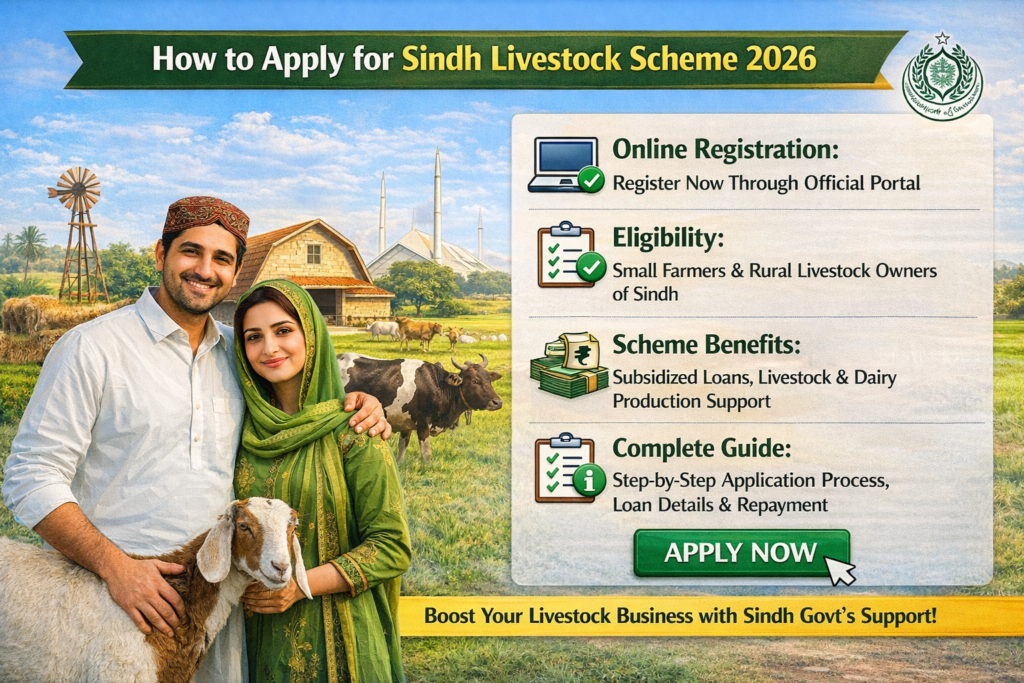
Livestock Subsidy Programs Sindh 2026 – Complete Guide, Registration, Eligibility, Benefits & Government Support Livestock farming plays a vital role in the rural economy of Sindh. Thousands of families depend on animals such as cows, buffalo, goats, and sheep for milk, meat, and income. However, many farmers face challenges such as high feed costs, animal diseases, and lack of modern farming facilities.
To support livestock farmers and improve agricultural productivity, the Government of Sindh has launched several livestock subsidy programs in Sindh 2026. These programs are designed to provide financial assistance, veterinary services, training, and subsidized livestock inputs to farmers across the province.
The initiatives are mainly managed by the Livestock & Fisheries Department Sindh, which oversees livestock development projects and ensures that farmers receive proper support.
This comprehensive SEO guide explains everything about livestock subsidy programs in Sindh 2026, including eligibility, registration methods, benefits, government initiatives, and frequently asked questions.
Overview of Livestock Subsidy Programs in Sindh
Livestock subsidy programs are government initiatives aimed at helping farmers improve their livestock productivity while reducing farming costs. These programs focus on providing affordable resources and technical assistance to small and medium livestock farmers.
Through these initiatives, the government aims to:
- Increase milk and meat production
- Improve animal health and breeding
- Support small livestock farmers
- Reduce poverty in rural areas
- Promote modern livestock farming techniques
These programs are especially important in rural regions where livestock farming is a major source of livelihood.
Importance of Livestock Farming in Sindh
Livestock is one of the most important sectors of agriculture in Sindh. Many farmers rely on animals for their daily income and food supply.
Major Livestock Animals in Sindh
Common animals raised by farmers include:
- Cows
- Buffalo
- Goats
- Sheep
- Camels
These animals provide milk, meat, wool, and other products that contribute to the economy.
Livestock farming also supports:
- Dairy production
- Meat supply chains
- Rural employment
- Organic fertilizer production
Because of its importance, the government continues to introduce subsidy programs to support livestock farmers.
Key Livestock Subsidy Programs in Sindh 2026
Several livestock programs are being implemented across Sindh to help farmers.
Livestock Distribution Programs
Under this program, the government distributes livestock such as goats or cows to eligible farmers.
The aim is to help poor families start livestock farming and generate income.
Subsidized Animal Feed Program
Animal feed is one of the biggest expenses for farmers. Subsidized feed programs help reduce this financial burden.
Farmers can purchase animal feed at discounted prices through government-approved suppliers.
Veterinary Health Programs
Animal health is crucial for livestock productivity. Government veterinary programs provide:
- Free vaccination campaigns
- Disease prevention programs
- Veterinary treatment services
These services help reduce livestock mortality rates.
Artificial Insemination Programs
To improve livestock breeding, the government promotes artificial insemination programs.
These programs help produce stronger and more productive livestock breeds.
Livestock Farmer Training Programs
Training programs are an important part of livestock development.
Farmers receive education on:
- Modern dairy farming
- Animal nutrition management
- Disease prevention
- Livestock breeding techniques
These training sessions help farmers adopt modern farming practices and improve productivity.
Financial Assistance for Livestock Farmers
Some livestock programs provide financial support for farmers.
Types of Financial Assistance
- Subsidies for livestock purchase
- Loans for livestock farming
- Grants for small farmers
- Support for building livestock shelters
Financial assistance allows farmers to expand their livestock operations.
How to Apply for Livestock Subsidy Programs in Sindh
Applying for livestock subsidy programs is relatively simple.
Step 1 – Visit Livestock Department Office
Farmers should visit the nearest livestock department office in their district.
Step 2 – Collect Application Form
Applicants must obtain the official livestock subsidy application form.
Step 3 – Fill Out the Application
Provide personal details such as:
- Name
- CNIC number
- Address
- Livestock details
Step 4 – Attach Required Documents
Applicants must attach required documents for verification.
Step 5 – Submit the Application
Submit the completed form to the livestock department office.
After submission, officials begin the verification process.
Online Registration for Livestock Subsidy Programs
In some districts, the government may also offer online registration.
Farmers can apply online by:
- Visiting the official livestock department portal
- Filling out the online application form
- Uploading required documents
- Submitting the form for review
Online registration helps farmers in remote areas apply easily.
Required Documents for Livestock Subsidy Application
Applicants must provide several documents to complete registration.
Required Documents
- Copy of CNIC
- Proof of residence in Sindh
- Livestock ownership details
- Mobile phone number
- Passport-size photographs
These documents help verify the applicant’s eligibility.
Eligibility Criteria for Livestock Subsidy Programs
Farmers must meet certain requirements to qualify for government subsidies.
Residency Requirement
Applicants must be residents of Sindh province.
Small Farmer Priority
Small and low-income farmers are given priority.
Valid CNIC
Applicants must have a valid national identity card.
Livestock Ownership
Farmers should already own livestock or plan to start livestock farming.
Rural Residency
Most programs focus on farmers living in rural areas.
Verification Process for Livestock Subsidy Applications
After submission, applications go through a verification process.
Identity Verification
Officials verify the applicant’s CNIC using government databases.
Farm Inspection
Authorities may visit farms to verify livestock ownership.
Income Assessment
The government checks whether the applicant qualifies as a low-income farmer.
Once verification is complete, eligible applicants are approved.
Distribution of Livestock Subsidies
After approval, farmers receive subsidies or livestock support through government centers.
Forms of Support
- Livestock distribution
- Subsidized animal feed
- Veterinary services
- Financial assistance
This support helps farmers expand their livestock operations.
Benefits of Livestock Subsidy Programs
The livestock subsidy programs offer several advantages.
Increased Farmer Income
Livestock farming provides steady income through milk and meat production.
Improved Animal Health
Vaccination programs reduce animal diseases.
Rural Economic Growth
Livestock programs strengthen rural economies.
Poverty Reduction
Financial support helps low-income families improve their livelihoods.
Role of Veterinary Services in Livestock Development
Veterinary services are critical for livestock productivity.
These services include:
- Animal disease diagnosis
- Vaccination programs
- Treatment of sick animals
- Farmer training on animal health
Healthy livestock leads to higher production and better income for farmers.
Government Efforts to Improve Livestock Sector
The Government of Sindh continues to introduce new initiatives to strengthen the livestock sector.
Modern Veterinary Hospitals
New veterinary clinics are being built in rural areas.
Mobile Veterinary Units
Mobile veterinary services help farmers in remote villages.
Livestock Registration Systems
Digital systems are being introduced to track livestock data.
Public Awareness Programs
Farmers receive training on modern livestock practices.
Challenges Facing Livestock Farmers in Sindh
Despite government support, livestock farmers face several challenges.
Animal Diseases
Diseases can spread quickly and cause major losses.
High Feed Prices
Rising feed costs make livestock farming expensive.
Climate Change
Extreme weather conditions affect livestock health.
Limited Access to Markets
Some farmers struggle to sell livestock products at fair prices.
Government subsidy programs aim to address these challenges.
Future of Livestock Farming in Sindh
The future of livestock farming in Sindh looks promising.
With continued government support and modern technology, farmers can improve livestock productivity and income.
Future plans may include:
- Expansion of livestock subsidy programs
- Development of modern dairy farms
- Introduction of digital livestock tracking systems
- Increased veterinary services
These initiatives will strengthen Sindh’s livestock sector.
Tips for Farmers Applying for Livestock Subsidy Programs
Farmers should follow these tips when applying for livestock subsidies.
Provide Accurate Information
Incorrect information may cause application rejection.
Submit Complete Documents
Incomplete applications may delay approval.
Maintain Livestock Records
Keeping records of animals helps during verification.
Attend Training Programs
Training helps farmers improve livestock management skills.
Frequently Asked Questions (FAQs)
What are livestock subsidy programs in Sindh?
These are government programs designed to support livestock farmers through financial assistance, veterinary services, and livestock distribution.
Who can apply for livestock subsidies?
Farmers living in Sindh who own or plan to start livestock farming can apply.
How can farmers apply for livestock subsidy programs?
Farmers can apply by visiting the nearest livestock department office or through online registration if available.
What documents are required?
Applicants need CNIC, proof of residence, livestock details, and photographs.
What benefits do farmers receive?
Farmers may receive livestock, veterinary services, feed subsidies, and financial assistance.
Final Words
The livestock subsidy programs in Sindh 2026 are important initiatives designed to strengthen the livestock sector and support rural communities. By providing financial assistance, veterinary services, and modern farming resources, the programs help farmers improve their income and livestock productivity.
Farmers should stay informed about these programs and apply through the Livestock & Fisheries Department Sindh to benefit from government support.
With proper implementation and farmer participation, these initiatives can transform livestock farming and contribute to sustainable rural development across Sindh.