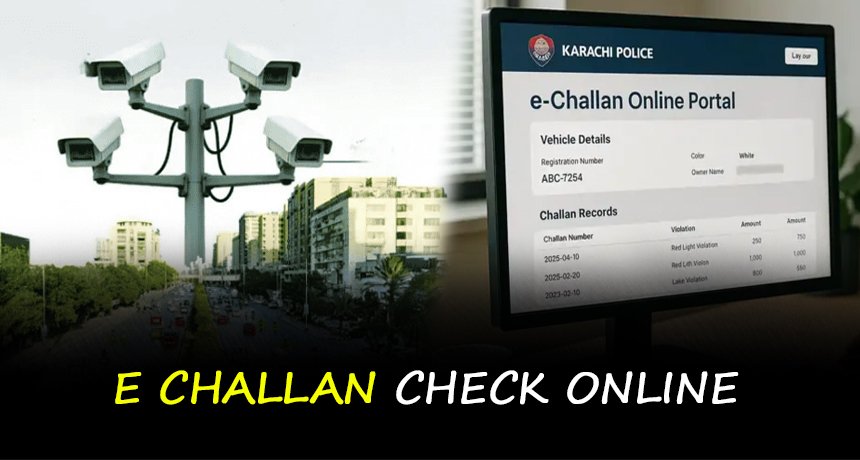
How To Check E-Challan Online in Pakistan 2026 – Complete Guide to CNIC, Vehicle Number Check & Online Payment Traffic management in major cities of Pakistan has improved significantly with the introduction of the E-Challan system. Instead of issuing paper tickets, traffic violations are now recorded digitally through cameras and electronic systems. This allows authorities to monitor roads more efficiently and ensure safer driving conditions.
The E-Challan system is widely used in cities like Karachi, where the Sindh Police and Sindh Traffic Police monitor traffic violations through modern surveillance technology.
With this system, drivers can easily perform an E-Challan check online using their CNIC or vehicle registration number. Citizens can also pay fines online through mobile banking apps and digital wallets.
This comprehensive guide explains how to check E-Challan online in Pakistan, how to pay traffic fines, and how to avoid penalties.
E-Challan Check Online 2026
Drivers can now easily check traffic violations online without visiting any police office. The digital system shows:
- Traffic violations linked to your CNIC
- Traffic fines linked to your vehicle
- Date and location of violation
- Amount of fine
- Payment status
Checking your E-Challan online helps drivers stay informed and avoid penalties or legal issues.
What is an E-Challan?
An E-Challan is a digital traffic ticket issued when a driver violates traffic laws.
Instead of receiving a paper ticket, the violation is recorded electronically and stored in a government database.
Traffic authorities can issue E-Challans through:
- Traffic police officers using handheld devices
- Automated road cameras
- Speed monitoring systems
- Red-light cameras
The system automatically records the violation and links it to the vehicle registration number.
Why the E-Challan System Was Introduced
The digital challan system was introduced to improve traffic management and transparency.
Key Reasons for the System
Reduce manual ticketing errors
Digital tickets reduce mistakes in traffic violation records.
Improve road safety
Drivers become more careful when they know violations are automatically recorded.
Ensure transparency
All drivers are treated equally under the automated system.
Efficient traffic monitoring
Traffic cameras help monitor busy roads more effectively.
Common Traffic Violations That Lead to E-Challans
Drivers may receive an E-Challan for several types of traffic violations.
Common Violations
- Over-speeding
- Running a red traffic signal
- Wrong-way driving
- Driving without a helmet (for motorcyclists)
- Driving without a valid license
- Illegal parking
- Using mobile phones while driving
Each violation has a specific fine amount set by traffic authorities.
How To Do an E-Challan Check Online
Checking an E-Challan online is quick and simple.
Step-by-Step Process
- Visit the official Sindh Police E-Challan portal.
- Locate the E-Challan check section.
- Enter your CNIC number or vehicle registration number.
- Click the Search or Check Challan button.
- The system will display all pending or paid challans.
This process takes only a few seconds and helps drivers track their traffic records.
How To Check E-Challan by CNIC
Checking an E-Challan through CNIC allows drivers to view all violations linked to their identity.
Steps to Check by CNIC
- Open the official E-Challan portal.
- Select the Check by CNIC option.
- Enter your 13-digit CNIC number.
- Click Search.
- View all challans associated with your CNIC.
This method is useful if a person owns multiple vehicles.
How To Check E-Challan by Vehicle Number
Another common method is checking the E-Challan using your vehicle registration number.
Steps
- Open the Sindh Police website or mobile app.
- Enter your vehicle registration number.
- Click the Check button.
- The system will display all challans linked to the vehicle.
This method is particularly helpful when buying a used car to ensure it has no pending fines.
How Traffic Cameras Detect Violations
Modern cities use Automatic Number Plate Recognition (ANPR) cameras.
These cameras:
- Capture the vehicle’s number plate
- Detect traffic violations
- Send violation data to the central database
The system automatically generates an E-Challan and sends a notification to the vehicle owner.
How To Pay an E-Challan Online
After checking your E-Challan, you can easily pay the fine online.
Payment Methods
You can pay traffic fines through:
- Mobile banking apps
- Internet banking
- Digital wallets
- Traffic police mobile apps
Popular digital payment options include:
- Easypaisa
- JazzCash
Steps to Pay E-Challan Online
Follow these steps to pay your traffic fine online.
Step 1 – Open Your Payment App
Launch your banking or digital wallet app.
Step 2 – Select Traffic Police Payment
Look for the Traffic Police E-Challan payment section.
Step 3 – Enter Your Details
Enter your:
- CNIC number
- Vehicle number
Step 4 – Confirm the Fine Amount
The system will display your pending fine.
Step 5 – Complete Payment
Pay the fine using your wallet balance or bank account.
Step 6 – Save the Receipt
Always keep the payment receipt as proof.
Benefits of Paying E-Challan Online
Online payment offers several advantages.
Quick Payment
Drivers can pay fines instantly without visiting any office.
Avoid Late Fees
Paying early prevents additional penalties.
Easy Record Keeping
Digital receipts help keep a record of payments.
No Long Queues
Drivers can avoid waiting in long lines at traffic police offices.
What Happens If You Don’t Pay an E-Challan
Ignoring traffic fines may lead to serious consequences.
Possible Issues
- Increased fines due to penalties
- Problems during vehicle transfer
- Vehicle registration issues
- Legal action in severe cases
Therefore, it is always better to check and pay challans regularly.
Importance of the E-Challan System for Road Safety
The E-Challan system helps improve road safety by encouraging responsible driving.
Positive Impact
- Reduced traffic violations
- Better law enforcement
- Safer roads for drivers and pedestrians
- Improved traffic monitoring
Sindh Government’s Efforts to Improve Traffic Management
The Government of Sindh has introduced several measures to improve road safety.
Modern Traffic Cameras
More surveillance cameras are being installed across major roads.
Digital Traffic Monitoring
Advanced systems help detect violations automatically.
Police Training
Traffic police officers receive modern training in traffic management.
Public Awareness Campaigns
Educational campaigns encourage drivers to follow traffic rules.
Tips to Avoid Traffic E-Challans
Drivers can avoid fines by following traffic rules carefully.
Useful Tips
- Always obey traffic signals
- Avoid over-speeding
- Wear helmets when riding motorcycles
- Carry a valid driving license
- Follow lane discipline
- Do not use mobile phones while driving
Following these rules helps keep roads safe for everyone.
Frequently Asked Questions (FAQs)
What is an E-Challan?
An E-Challan is a digital traffic fine issued when a driver violates traffic rules.
How can I check my E-Challan online?
You can check it by entering your CNIC or vehicle number on the official traffic police portal.
Can I check E-Challan through mobile apps?
Yes, many traffic police apps allow users to check and pay challans online.
How can I pay an E-Challan online?
You can pay using mobile banking apps, internet banking, or digital wallets like Easypaisa and JazzCash.
What happens if I ignore an E-Challan?
Ignoring fines may cause penalties and issues with vehicle registration or transfer.
Final Words
The E-Challan system has made traffic management more efficient and transparent in Pakistan. By using digital technology, authorities can monitor violations and enforce traffic laws more effectively.
Drivers can easily perform an E-Challan check online using their CNIC or vehicle number and pay fines through mobile banking or digital wallets.
Regularly checking your traffic record ensures that you stay updated on any violations, avoid late penalties, and maintain a clean driving history.
Following traffic rules and paying fines on time not only keeps you legally safe but also contributes to safer roads for everyone.