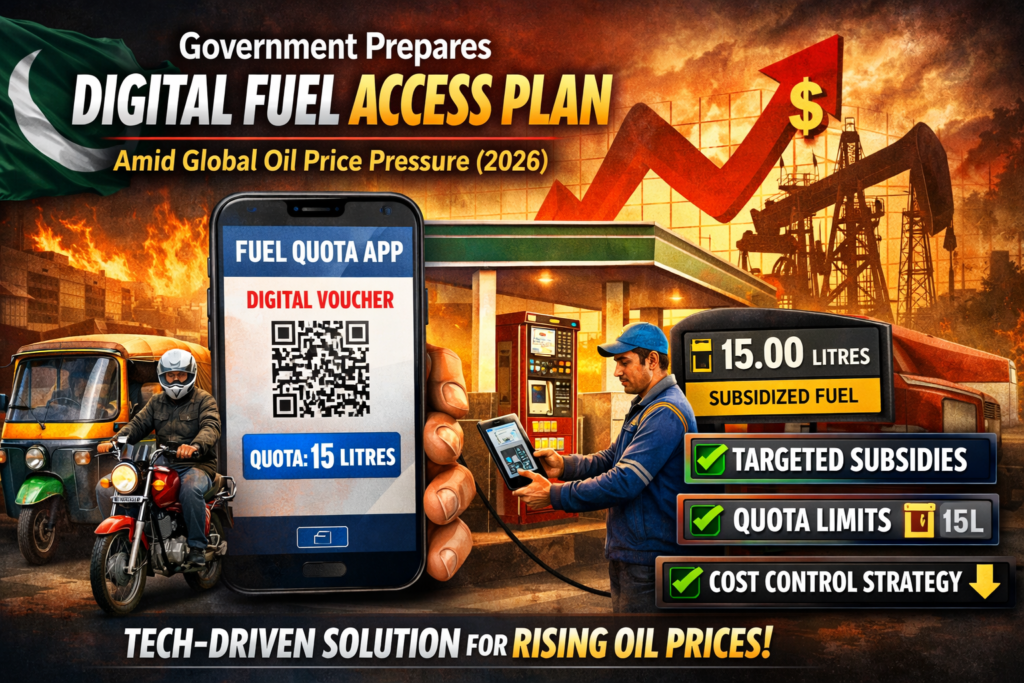
Government Prepares Digital Fuel Access Plan Amid Global Oil Price Pressure in 2026 As global oil prices continue to surge, the Government of Pakistan is preparing to launch a mobile app-based fuel quota system aimed at managing fuel consumption and providing targeted relief to citizens.
The initiative comes at a critical time when economic pressures and international market instability are forcing policymakers to rethink traditional fuel subsidy mechanisms.
Pakistan Moves Toward a Digital Fuel Quota System
According to recent developments, the government is in the final stages of introducing a digital fuel access system that will regulate how petroleum products are distributed across the country.
The plan is expected to initially focus on:
- Motorcycles
- Rickshaws
Authorities are still reviewing whether small cars (up to 800cc) should also be included in the scheme.
How the Mobile App-Based Fuel System Will Work
The proposed system will operate through a centralized digital platform, ensuring transparency and efficiency in fuel distribution.
Step-by-Step Process
1. User Registration
Vehicle owners will register through a mobile app by providing:
- CNIC (National Identity Card)
- Vehicle registration number
- Mobile phone details
2. Fuel Quota Assignment
After verification, each user will be allocated a fixed fuel quota based on:
- Type of vehicle
- Usage needs
- National fuel availability
3. Digital Approval Before Refuelling
Before purchasing fuel, users must generate a digital approval or voucher through the app.
4. Instant Verification at Petrol Pumps
Fuel stations will verify the voucher in real time using dedicated devices.
5. Controlled Fuel Dispensing
If a user tries to exceed their quota, the system will automatically restrict the supply to the allowed limit.
Role of Petrol Pumps and Oil Companies
To ensure smooth implementation, fuel stations will be equipped with modern tools and systems.
Key Measures
- Installation of dedicated devices at petrol pumps
- Real-time verification systems
- Separate dispensing points for subsidized fuel
- Oversight by oil marketing companies (OMCs)
This setup will help maintain consistency, speed, and transparency across all fuel outlets.
Targeted Subsidies for Low-Income Users
One of the main goals of the system is to provide targeted financial relief to those most affected by rising fuel costs.
Key Beneficiaries
- Motorcycle riders
- Rickshaw drivers
- Daily wage earners
- Small transport operators
By focusing on these groups, the government aims to ensure that subsidies reach those who need them most, rather than being distributed broadly.
Why Pakistan Is Introducing a Fuel Quota System
The decision to implement a digital fuel system comes in response to growing economic challenges.
Major Factors Behind the Move
- Rising global oil prices
- Geopolitical tensions affecting supply chains
- Disruptions in key oil routes
- Increased pressure on foreign exchange reserves
- High cost of maintaining fuel subsidies
Despite increasing prices, fuel demand in Pakistan has remained strong, further intensifying the financial burden on the government.
Economic Pressure and Rising Fuel Costs
Recent efforts to stabilize fuel prices have required massive government funding, making it difficult to sustain subsidies in the long term.
Officials believe that a controlled and digital quota system will:
- Reduce unnecessary fuel usage
- Lower subsidy expenses
- Improve overall economic stability
Benefits of the Digital Fuel Access Plan
1. Efficient Fuel Management
Ensures better control over national fuel consumption.
2. Fair Distribution
Provides equal and need-based access to fuel.
3. Transparency
Digital monitoring reduces misuse and corruption.
4. Cost Control
Helps the government manage subsidy spending effectively.
5. Convenience for Users
Mobile app allows easy access and management of quotas.
Challenges the System May Face
While the system offers multiple advantages, some challenges are expected during implementation.
Potential Issues
- Limited smartphone access in rural areas
- Internet connectivity challenges
- Technical issues during rollout
- Resistance from fuel retailers
The government is likely to address these challenges through training, awareness programs, and technical support.
What Comes Next?
The government is expected to make a final decision soon, particularly regarding:
- Inclusion of small cars
- Final quota limits
- Nationwide rollout timeline
Officials have confirmed that the project is being fast-tracked due to the urgency of the current energy situation.
Future Outlook: A Shift Toward Smart Fuel Management
The introduction of a mobile app-based fuel quota system represents a major shift toward digital governance and smart resource management in Pakistan.
Long-Term Possibilities
- Expansion to other vehicle categories
- Integration with national databases
- AI-based consumption tracking
- Improved subsidy targeting
This initiative could set a precedent for modernizing fuel distribution systems in developing economies.
Final Thoughts
The government’s digital fuel access plan is a timely response to the challenges posed by rising global oil prices and economic pressure.
By leveraging technology and targeted policies, the system aims to:
- Protect vulnerable groups
- Promote responsible fuel usage
- Strengthen economic resilience
As Pakistan moves toward implementation, the success of this initiative will depend on efficient execution, public cooperation, and continuous monitoring.
SEO Keywords Included:
- Digital fuel quota system Pakistan
- Fuel app Pakistan 2026
- Petrol subsidy motorcycles Pakistan
- Fuel rationing system Pakistan
- Government fuel policy Pakistan
- Oil crisis Pakistan fuel plan